
An In-Depth Guide to Modern Ceramic Vase Shapes, Consumer Preferences, and Product Selection for E-commerce Buyers
Modern ceramic vases have become much more than simple containers for flowers. On today’s e-commerce platforms, they are decorative objects, styling accessories, gift items, and even statement pieces that help define the personality of a living space.
For online retailers, home décor brands, wholesalers, and gift suppliers, choosing the right vase shapes can make a noticeable difference in product performance. A beautiful glaze or attractive color may catch a shopper’s attention, but the silhouette is often what makes someone stop scrolling, click on a product, and imagine how it would look in their home.
Walk through popular home décor categories on Amazon, Etsy, Wayfair, or other online marketplaces, and you will notice a wide variety of ceramic vase silhouettes. Some are simple and understated, while others have sculptural curves, irregular outlines, oversized bodies, or distinctive openings.
However, not every attractive shape is equally suitable for online selling. Some styles are easier to match with different interiors, some photograph particularly well, and others appeal to shoppers looking for unique gifts or statement décor.
So, which shapes of modern ceramic vases are popular in e-commerce? More importantly, which shapes should wholesalers, retailers, and private-label brands consider when developing their next product collection?
Let’s explore the styles, their commercial appeal, and the practical factors worth considering before placing a bulk order.
Quick Answer: What Are the Most Popular Modern Ceramic Vase Shapes?
The most popular modern ceramic vase shapes in e-commerce home décor collections include:
- Organic-shaped vases: Asymmetrical curves and naturally irregular outlines that create a relaxed, artistic appearance.
- Donut and loop-shaped vases: Sculptural designs with hollow centers that work as decorative statement pieces.
- Ribbed and fluted vases: Vertical grooves and raised lines that add texture and visual depth.
- Bottle-shaped vases: Narrow necks and rounded or elongated bodies that suit minimalist interiors.
- Bud vases: Small, simple designs intended for single stems or small floral arrangements.
- Bulbous and rounded vases: Full, rounded bodies with short necks that create a soft, contemporary silhouette.
- Wavy and ruffled vases: Flowing rims and irregular edges that bring movement to modern home décor.
- Sculptural abstract vases: Artistic forms inspired by geometry, architecture, and human figures.
For e-commerce sellers, a balanced collection usually works better than relying on one fashionable silhouette. Simple bottle and rounded vases provide everyday appeal, while sculptural, loop, and wavy designs help a collection stand out in product photography and social media.
1. Why Does Vase Shape Matter So Much in E-commerce?
When customers visit a physical home décor store, they can pick up a vase, examine its proportions, feel its surface, and imagine how it might look on a shelf or dining table.
Online shopping is different.
Customers usually make their first decision based on a product image. They may spend only a few seconds looking at a thumbnail before deciding whether to click.
This makes the silhouette particularly important.
A vase with a distinctive outline can communicate its design style even when displayed against a plain white background. A rounded vase immediately feels different from a tall cylindrical one, while an asymmetrical vase suggests a more artistic personality.
There are several reasons why vase shapes influence online product performance.
1.1 Distinctive Silhouettes Attract More Attention
E-commerce platforms contain thousands of home decoration products. If ten ceramic vases have similar colors and finishes, their shapes become one of the easiest ways for shoppers to distinguish them.
For example, a white ceramic bottle vase is a familiar choice. However, a white ceramic vase with an irregular opening, twisted neck, or sculptural body can attract shoppers looking for something less conventional.
This is particularly relevant to product categories such as modern ceramic vases for living room decoration, minimalist shelf décor, and contemporary tabletop accessories.
1.2 Shapes Help Customers Imagine Different Interior Styles
A vase is rarely purchased in isolation. Customers often imagine where they will place it before making a purchase.
- A tall, narrow vase may suit an entryway console.
- A round vase can complement a coffee table.
- A small bud vase works well on a bedside table.
- An abstract sculptural vase can become the focal point of a bookshelf.
The more clearly a product communicates its intended use, the easier it is for shoppers to understand its value.
1.3 Unique Shapes Create Better Content for Social Commerce
Pinterest, Instagram, and TikTok have made visual presentation an important part of home décor discovery.
A sculptural vase can be photographed from several angles, styled with dried flowers, or displayed as part of a decorative arrangement.
Pinterest’s 2026 trend forecast also highlights expressive, sculptural silhouettes in its FunHaus home décor direction.
For retailers, this suggests an opportunity to develop products that are not only attractive in a traditional product listing but also interesting enough to feature in lifestyle photography and short-form videos.
2. Eight Modern Ceramic Vase Shapes Worth Adding to an E-commerce Collection
Let’s look at the shapes individually, including their design characteristics, customer appeal, and potential commercial applications.
2.1 Organic-Shaped Ceramic Vases: Natural Curves with an Artistic Feel
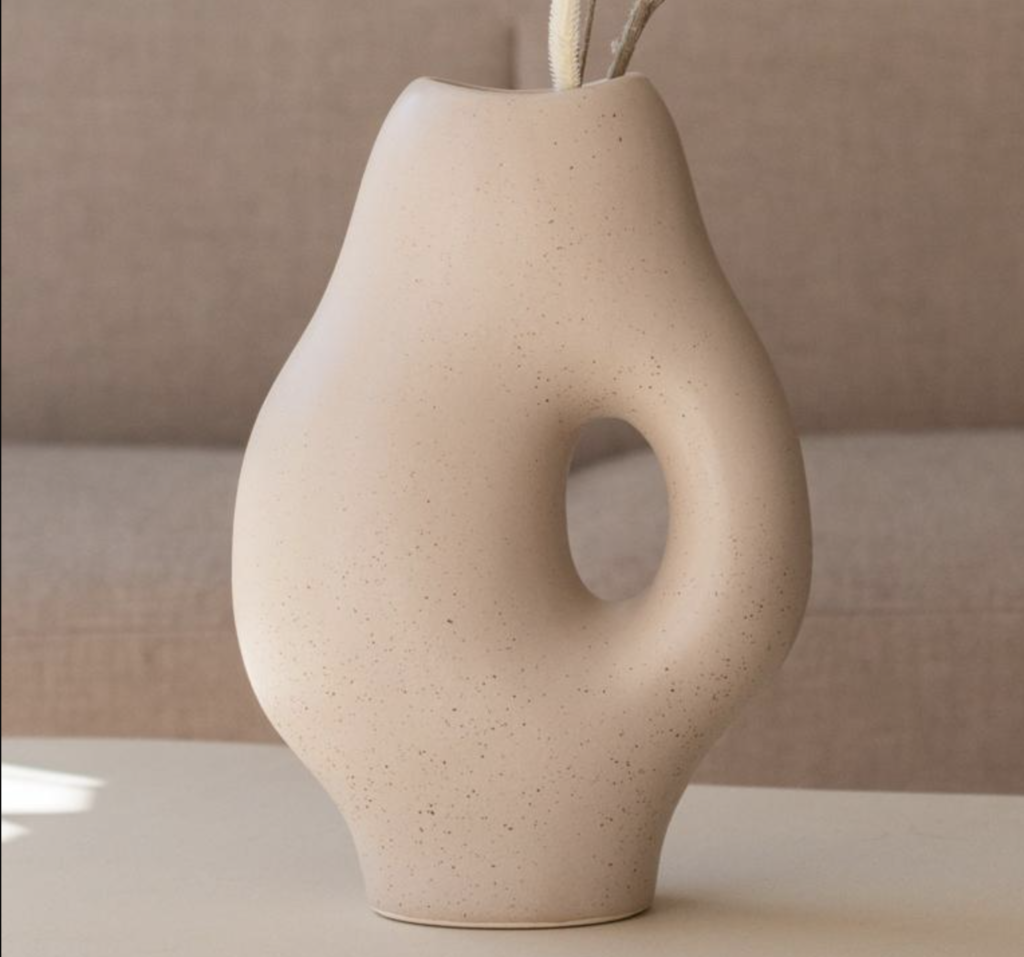
Organic-shaped ceramic vases are among the most recognizable directions in contemporary home décor.
Instead of perfectly symmetrical bodies, these designs feature gentle curves, uneven shoulders, irregular openings, or naturally flowing outlines.
Some look as though they have been shaped by hand, while others have deliberately exaggerated proportions that make them feel like small decorative sculptures.
Why do customers like this shape?
Modern interiors increasingly combine clean furniture arrangements with softer decorative elements. An organic vase introduces a little visual movement without making the room feel crowded.
For example, a beige organic ceramic vase placed on a wooden console can create a relaxed atmosphere. A white irregular vase on an open shelf can add character without requiring additional decorative accessories.
Popular variations include:
- Asymmetrical ceramic vases with uneven rims.
- Wabi-sabi-inspired decorative vases with irregular bodies.
- Natural curved vases with soft shoulders.
- Sculptural vases featuring off-center openings.
- Minimalist organic vases in cream, sand, and warm white.
E-commerce opportunity
This category is suitable for home décor brands targeting consumers who appreciate minimalist, Scandinavian, Japandi, and contemporary interiors.
It also works well for lifestyle photography. Rather than showing the vase alone, retailers can style it with dried branches, neutral textiles, wooden furniture, or a simple stack of books.
For wholesale buyers, offering several related organic silhouettes in different heights can create a coordinated collection without making every item look identical.
2.2 Donut and Loop-Shaped Ceramic Vases: A Distinctive Statement Piece
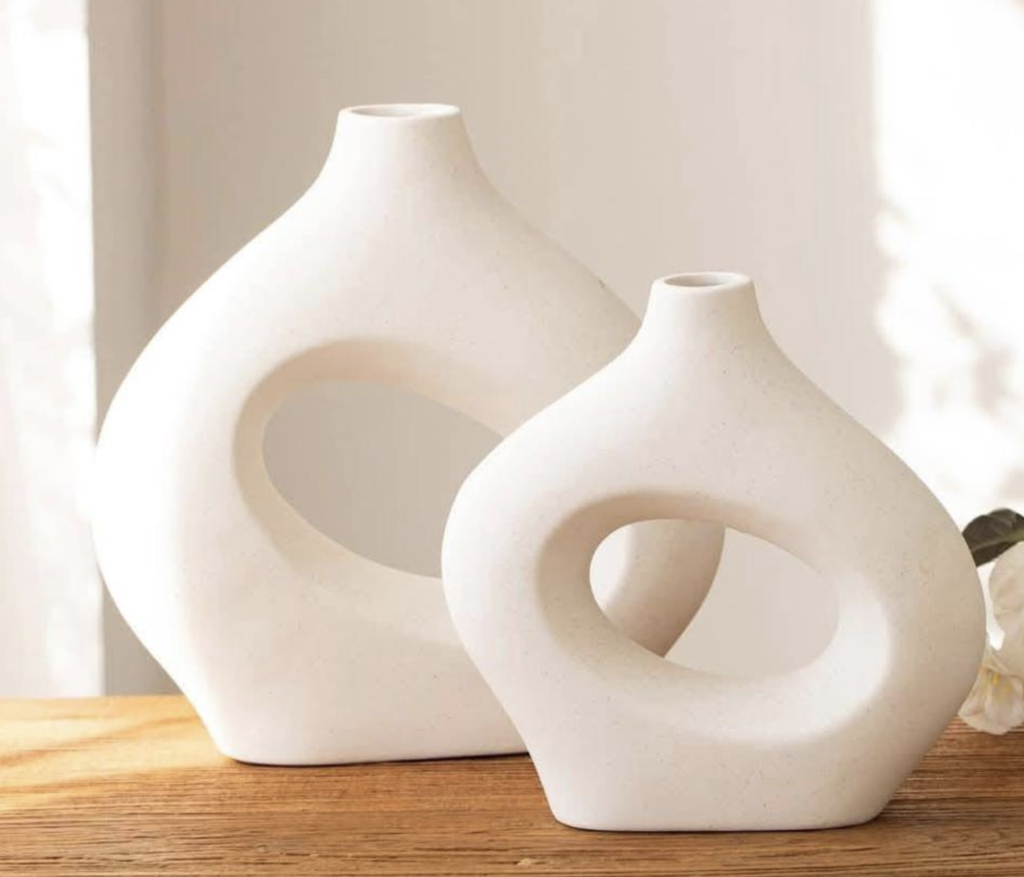
Donut and loop-shaped vases have a very recognizable appearance. Their defining feature is a circular or oval opening through the body, creating a design that resembles a ring, arch, or sculptural loop.
Some designs feature a thick, rounded ring with a small flower opening at the top. Others have more complicated structures with curved extensions and asymmetrical openings.
What makes these vases interesting is that their visual appeal does not depend on flowers.
Even when displayed empty, the hollow center creates an interesting contrast between solid and open space.
Why does this shape attract online shoppers?
Unlike a traditional flower vase, a donut vase immediately communicates that it is a decorative object. It looks different in a product thumbnail and offers retailers an opportunity to present something more distinctive.
This shape is especially suitable for:
- Modern coffee table decorations.
- Minimalist bookshelf accessories.
- Contemporary living room styling.
- Housewarming gifts.
- Decorative vase sets.
From a product development perspective, the opening and overall balance deserve particular attention. If the central opening is too small or the body is excessively thick, the design may look visually heavy.
Manufacturers should also consider the vase’s center of gravity, base stability, and packaging protection. Loop-shaped products may have exposed curved sections that require carefully designed protective inserts.
Wholesale suggestion: Consider launching a small collection of loop vases in three coordinated sizes. A compact version can serve as an affordable gift item, while larger versions can target premium home décor retailers.
2.3 Ribbed and Fluted Ceramic Vases: Texture That Makes Simple Shapes More Interesting
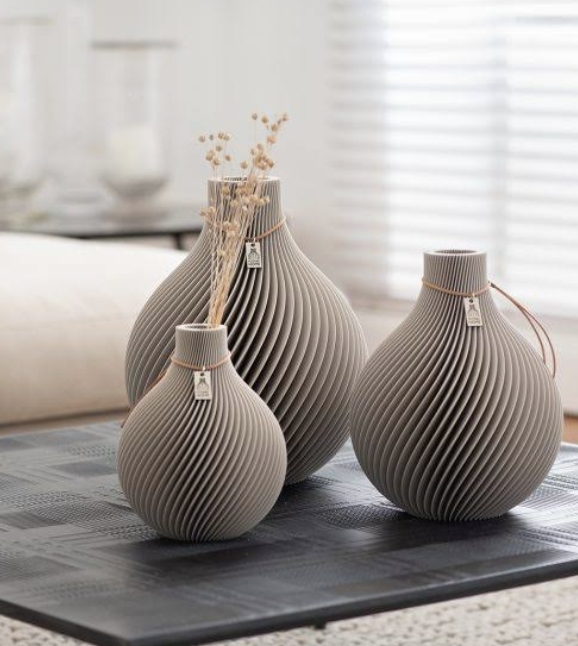
Ribbed and fluted ceramic vases are a practical choice for brands that want products with visual character but do not necessarily want unusual silhouettes.
Their bodies usually feature repeated vertical grooves, raised lines, or pleated patterns.
The overall shape can remain simple, such as cylindrical, bottle-shaped, or rounded. The texture does most of the decorative work.
This is one reason why ribbed designs are relatively easy to incorporate into different home décor collections.
A fluted white ceramic vase can look elegant in a minimalist room, while a ribbed beige vase may complement natural and rustic interiors.
Popular design variations include:
- Fine vertical ribbed cylindrical vases.
- Deep-groove fluted bottle vases.
- Pleated rounded ceramic vases.
- Wide-body ribbed vases with short necks.
- Textured vases with contrasting smooth rims.
What should e-commerce buyers consider?
First, the depth and spacing of the grooves matter.
Fine grooves create a delicate, refined appearance, while wider grooves produce a stronger visual effect. However, extremely deep or narrow grooves may make cleaning more difficult.
Second, consistency matters for bulk purchasing. When a retailer orders several hundred pieces, the groove pattern, proportions, and glaze coverage should remain visually consistent.
This category is especially suitable for modern ceramic decorative vases, wholesale home accessories, and coordinated tabletop décor collections.
2.4 Bottle-Shaped Ceramic Vases: A Timeless Choice for Modern Homes
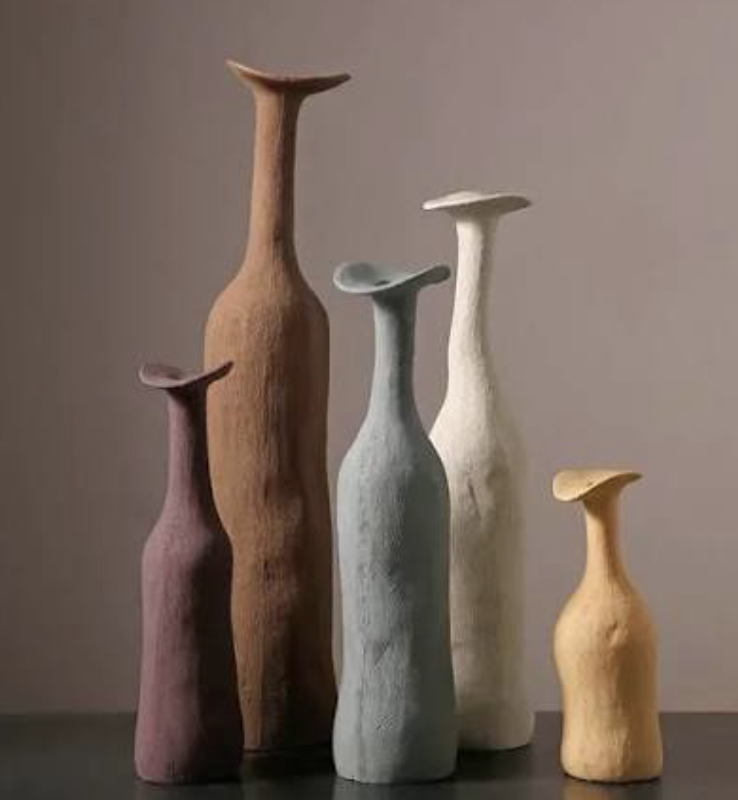
Bottle-shaped vases may not be the most experimental designs, but they remain an important part of a commercial vase collection.
Their familiar structure usually consists of a rounded or elongated body, sloping shoulders, and a narrow neck.
Some designs are inspired by traditional pottery bottles, while modern versions simplify the silhouette with clean lines and restrained proportions.
Why do they remain relevant?
Because they are easy for customers to understand and use.
A narrow opening helps hold individual branches, dried flowers, eucalyptus stems, or decorative grasses. Taller versions also work well on entryway tables, dining room consoles, and floor-standing arrangements.
Popular variations include:
- Tall narrow-neck ceramic bottle vases.
- Rounded bottle vases with short necks.
- Slim cylindrical bottle vases.
- Vintage-inspired ceramic bottle silhouettes.
- Minimalist matte white bottle vases.
Commercial value for retailers
Bottle-shaped vases are suitable for both everyday home décor and seasonal product collections.
They can be sold individually or grouped with different heights to create a coordinated decorative set.
For cross-border e-commerce sellers, the shape also offers opportunities to create product variations through different glaze colors, heights, and surface treatments without changing the basic design.
One important detail is the opening diameter. A very narrow opening may work well for a single stem but may limit the vase’s usefulness for larger arrangements.
Clear product descriptions and photographs showing the opening size can help reduce customer uncertainty.
2.5 Bud Vases: Small Products with Flexible Styling Possibilities
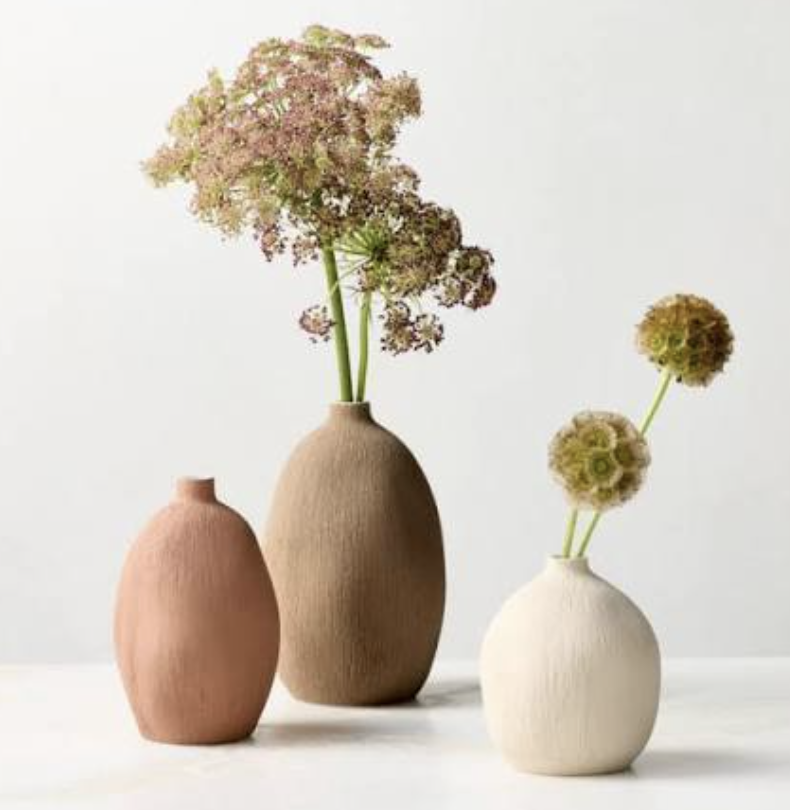
Bud vases are designed for single flowers or small stems. They are generally compact, lightweight in appearance, and available in a wide variety of silhouettes.
Some have narrow bottle-like necks, while others feature rounded bodies, geometric forms, or playful abstract outlines.
Their biggest commercial advantage is versatility.
A single bud vase can decorate a bedside table, desk, windowsill, or bathroom counter. Several small bud vases can also be grouped together to create a more complete decorative arrangement.
Why are bud vases attractive to e-commerce sellers?
Not every customer is looking for a large statement piece. Some prefer small decorative products that are affordable, easy to style, and suitable for gifting.
Bud vase sets also offer opportunities for product bundling.
For example, a three-piece ceramic bud vase set with different heights can create a stronger retail proposition than selling three visually identical items separately.
Potential product directions include:
- Minimalist single-stem ceramic vases.
- Small round bud vases.
- Geometric mini ceramic vases.
- Colorful decorative bud vase sets.
- Modern Nordic-style flower vases.
A practical sourcing consideration
The neck opening should match the intended use. If the opening is too wide, a single flower may lean awkwardly. If it is too narrow, inserting stems can become inconvenient.
For bulk buyers, checking the opening diameter and the stability of each shape during sample approval is worthwhile.
2.6 Bulbous and Rounded Ceramic Vases: Soft Proportions for Contemporary Interiors
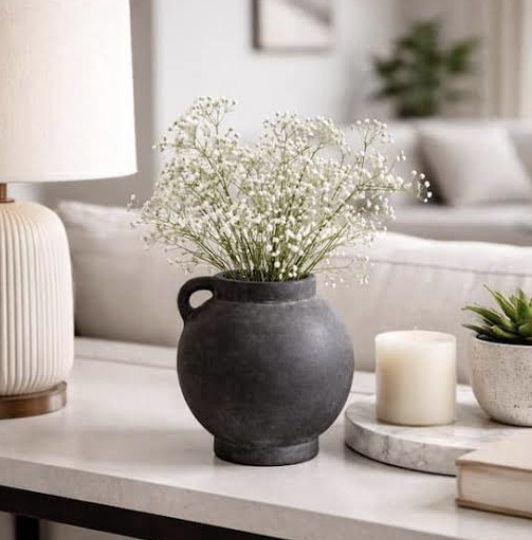
Rounded vases have a simple but appealing design language.
Their bodies are full and curved, sometimes almost spherical, while the neck is usually short or moderately narrow.
Compared with tall and slender vases, rounded designs feel softer and more substantial.
They are particularly suitable for customers who prefer warm, comfortable interiors rather than highly geometric decorative styles.
Popular options include:
- Globe-shaped ceramic flower vases.
- Round belly vases with narrow openings.
- Short-neck bulbous vases.
- Flattened spherical decorative vases.
- Double-rounded or stacked-body vases.
Where do these products work best?
Medium-sized rounded vases are suitable for coffee tables, dining tables, sideboards, and open shelving.
Larger versions can be used as statement pieces in living rooms or hotel reception areas.
They also photograph well from the front and at a slight angle because the curved body creates a strong visual outline.
For e-commerce brands, a rounded vase collection can be developed around different body proportions. A wider, lower version can target tabletop decoration, while a taller version can appeal to customers looking for a more prominent centerpiece.
2.7 Wavy and Ruffled Ceramic Vases: Playful Details That Catch the Eye
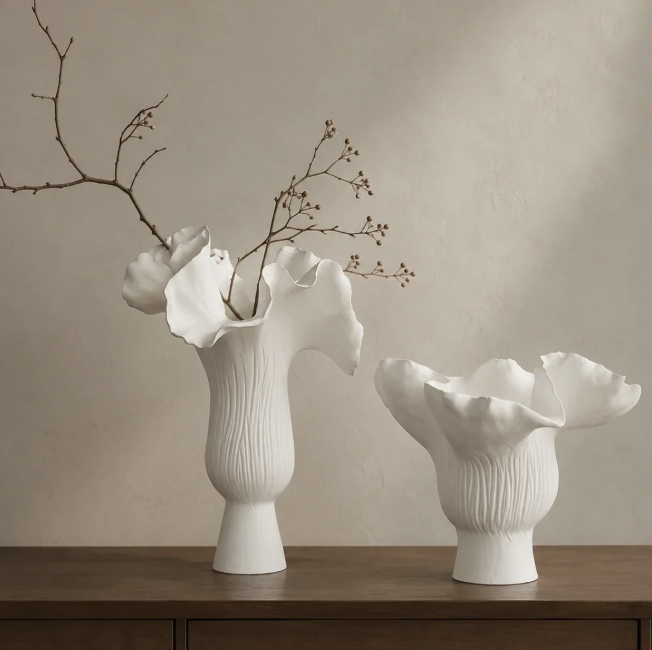
Wavy and ruffled vases are recognizable through their uneven edges, flowing outlines, or undulating surfaces.
Some designs feature a wavy opening around the mouth. Others have rippled bodies or exaggerated curves that make the entire vase look almost like a piece of folded fabric.
These designs appeal to customers who want something more expressive than a conventional decorative vase.
They are also well suited to social media content because their outlines create interesting visual effects when photographed from different angles.
Popular design directions include:
- Ruffled-edge ceramic flower vases.
- Wavy-mouth cylindrical vases.
- Rippled-body decorative vases.
- Soft-edged abstract ceramic vessels.
- Colorful sculptural wavy vases.
The commercial opportunity lies in balancing creativity with usability.
An overly complicated opening may make it difficult to arrange flowers. A highly irregular body may also create challenges when designing protective packaging.
For online retailers, the product listing should include front, side, and top views so customers can understand the full shape.
For manufacturers, sample approval should focus on rim consistency, dimensional accuracy, and the protection of delicate edges during transportation.
2.8 Sculptural Abstract Ceramic Vases: When the Vase Becomes the Decoration
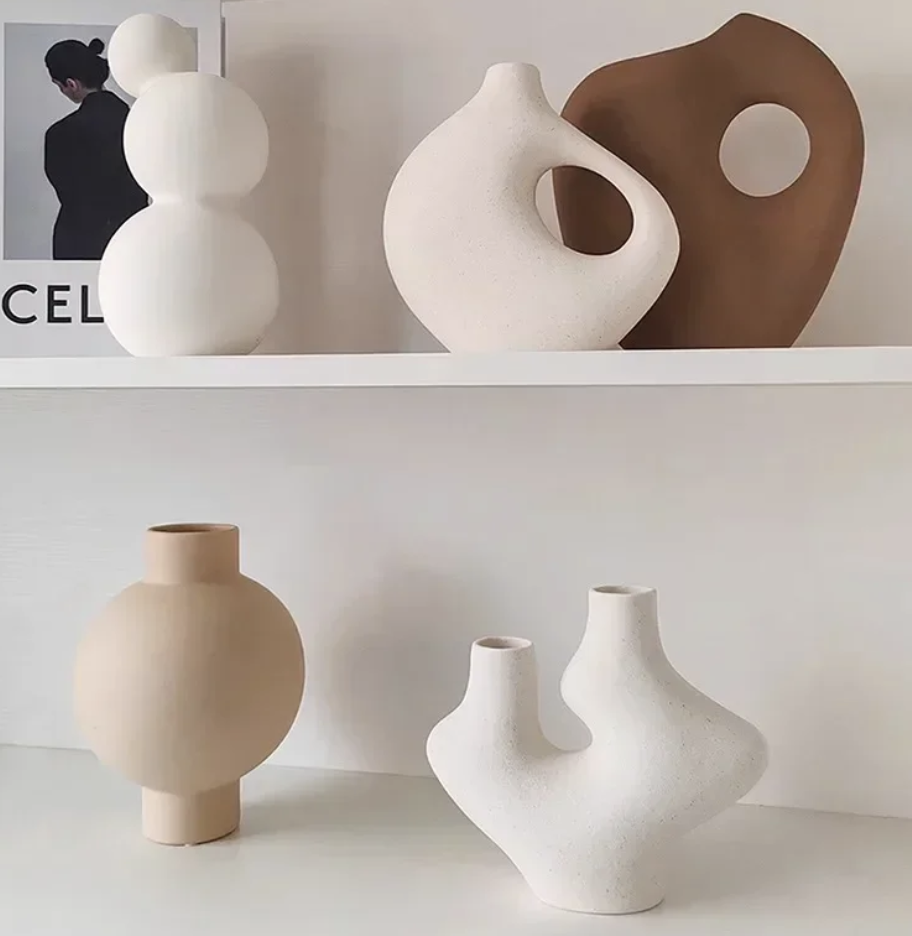
Sculptural abstract vases represent one of the more creative directions in modern home décor.
Instead of following traditional vase proportions, these products may be inspired by architecture, human faces, geometric structures, or abstract art.
Some designs feature connected shapes, unusual openings, exaggerated shoulders, or forms that look more like small sculptures than conventional flower containers.
Examples include:
- Abstract face-shaped ceramic vases.
- Geometric sculptural flower vases.
- Architectural arch-shaped vases.
- Asymmetrical stacked-form vases.
- Artistic decorative vessels with multiple openings.
The appeal is straightforward: customers are buying the appearance as much as the function.
This makes sculptural vases particularly relevant to design-led home décor brands, gift retailers, and online stores that want a distinctive product identity.
However, there is a difference between a visually interesting design and a commercially practical one.
A complicated shape may look impressive in a photograph but create difficulties in production, quality inspection, or shipping.
Before introducing an abstract vase into a wholesale collection, buyers should evaluate its standing stability, overall dimensions, packaging requirements, and repeatability in mass production.
3. Comparison of Popular Modern Ceramic Vase Shapes
Different silhouettes appeal to different customer groups. The following table provides a practical overview for retailers and wholesale buyers planning a product collection.
| Vase Shape | Main Design Features | Suitable Interior Styles | Common Selling Applications | Commercial Consideration |
|---|---|---|---|---|
| Organic-shaped | Irregular curves, asymmetrical outlines | Japandi, Wabi-sabi, Scandinavian | Living room décor, premium home accessories | Distinctive appearance and shape consistency |
| Donut / Loop | Hollow center, circular or oval structure | Contemporary, minimalist, artistic | Statement décor, gifts | Stability and protective packaging |
| Ribbed / Fluted | Vertical grooves, raised lines | Modern, Nordic, transitional | Everyday home décor, retail collections | Groove consistency and glaze coverage |
| Bottle-shaped | Narrow neck, rounded or elongated body | Minimalist, classic modern | Flower arrangements, console tables | Opening diameter and proportion |
| Bud vase | Small body, narrow opening | Scandinavian, minimalist, eclectic | Gift sets, tabletop accessories | Bundle presentation and stem compatibility |
| Bulbous / Rounded | Full body, soft curved silhouette | Organic modern, contemporary | Coffee tables, sideboards | Base stability and visual proportions |
| Wavy / Ruffled | Uneven rim, flowing edges | Artistic, playful, modern | Decorative accents, social commerce | Delicate edges and packaging protection |
| Sculptural Abstract | Unusual geometric or artistic forms | Contemporary, eclectic, modern luxury | Statement pieces, design collections | Production complexity and shipping safety |
For most e-commerce businesses, it is worth combining familiar shapes with a few more distinctive designs. This gives shoppers different price points and styling options while helping the store maintain a recognizable design identity.
4. Which Ceramic Vase Shapes Are More Suitable for Different E-commerce Platforms?
Not every e-commerce platform attracts the same type of customer. A product that performs well in a handmade-inspired marketplace may not necessarily be the best choice for a large home furnishing retailer.
Understanding the differences between platforms can help buyers develop a more suitable product assortment.
4.1 Amazon: Focus on Versatile Shapes and Clear Product Functions
Amazon shoppers often compare multiple products before making a purchase. They may look at product dimensions, customer reviews, prices, colors, and practical uses.
For this reason, recognizable vase silhouettes are worth prioritizing.
Recommended product categories include:
- Modern ceramic bottle vases.
- Ribbed ceramic vases for home decoration.
- Ceramic bud vase sets.
- Rounded ceramic tabletop vases.
- Neutral-colored decorative vase collections.
For sellers, product variations can be an effective way to expand an existing listing. For example, the same bottle-shaped vase design may be offered in several heights or glaze colors.
However, product variations should have meaningful differences. Simply changing a small color detail may not provide enough value to customers.
Product photography should clearly communicate dimensions, opening sizes, and styling possibilities. A lifestyle photograph can attract attention, but a dimension reference image helps customers understand exactly what they are buying.
4.2 Etsy: Focus on Artistic Shapes and Individual Character
Etsy is particularly relevant to shoppers looking for distinctive, creative, and gift-oriented home décor.
A quick look at the Etsy ceramic sculptural vase marketplace shows a broad range of organic, abstract, ruffled, and artistic designs.
These listings illustrate how many different interpretations of the modern ceramic vase can coexist within one product category. Etsy+1
Suitable product directions include:
- Organic asymmetrical ceramic vases.
- Donut and loop-shaped vases.
- Abstract face vases.
- Handcrafted-look bud vase collections.
- Wavy and sculptural decorative vessels.
For manufacturers and wholesale buyers, this market offers useful inspiration for developing distinctive silhouettes.
One important point: artistic appearance does not necessarily mean every product must have complicated details. A simple rounded body with an unusual opening can be enough to create a recognizable design.
4.3 Wayfair and Home Décor Retail Websites: Focus on Coordinated Collections
Home furnishing websites often encourage customers to purchase products that work together within a room.
This creates an opportunity for retailers to develop coordinated vase collections instead of selling unrelated individual designs.
For example, a collection might include:
- One tall bottle-shaped vase.
- One medium rounded vase.
- One small bud vase.
- One sculptural accent vase.
The products can share similar glaze colors, textures, or design details while offering different shapes.
This approach makes it easier for shoppers to create a coordinated display and gives retailers more opportunities to introduce complementary products.
4.4 Pinterest and Social Commerce: Focus on Photogenic Silhouettes
Pinterest and social media are important discovery channels for home décor products.
Unlike traditional product searches, users may discover a vase while looking for living room inspiration, shelf styling ideas, housewarming gifts, or seasonal decoration.
The Messe Frankfurt home décor trend overview published in April 2026 highlights sculptural vases as expressive decorative objects and points to their relevance for retailers’ year-round assortments. Conzoom Solutions
For social commerce, the following silhouettes offer particularly interesting visual opportunities:
- Loop-shaped vases with visible hollow centers.
- Wavy vases with distinctive rims.
- Organic vases with unusual proportions.
- Sculptural abstract vases.
- Rounded vases arranged in groups of different heights.
A good product should look attractive from multiple angles, not just from the front. This gives sellers more material for short videos, product carousels, and lifestyle photography.
5. How Should E-commerce Buyers Choose the Right Vase Shapes for Their Target Customers?
Knowing which shapes are popular is only the first step. The next challenge is deciding which designs deserve investment.
For wholesalers, retailers, and private-label brands, a successful product collection should balance customer preferences, selling prices, production requirements, and shipping considerations.
Here are five practical factors to consider.
5.1 Start with Your Target Customer, Not Just the Latest Trend
Different customers have different expectations.
A home décor retailer selling to minimalist consumers may prefer neutral-colored bottle vases, ribbed designs, and organic silhouettes.
A gift retailer may be more interested in small bud vase sets, abstract face vases, and unusual decorative shapes.
A premium home décor brand may prefer larger sculptural pieces with distinctive proportions and carefully developed surface finishes.
Before selecting products, consider the following questions:
- Are your customers looking for functional flower vases or decorative objects?
- Do they prefer simple designs or artistic statement pieces?
- Are they shopping for individual products or coordinated sets?
- What price range does your market support?
- Will the products mainly be displayed on shelves, tables, consoles, or floors?
These questions can help prevent a common sourcing mistake: choosing products because they look attractive in a factory showroom rather than because they match actual customer demand.
5.2 Build a Collection with Different Sizes and Proportions
A good vase collection should offer visual variety.
For example, instead of sourcing ten similar medium-sized bottle vases, buyers can develop a collection with different heights, body proportions, and openings.
A practical assortment might include:
- Small vases for bedside tables and gift collections.
- Medium vases for coffee tables and open shelving.
- Tall vases for entryways and console tables.
- Sculptural accent vases for premium decorative displays.
Different sizes also allow retailers to develop single-product listings and multi-piece bundles.
However, proportions should be considered carefully. A tall vase with a very narrow base may be unstable, while an excessively wide body can take up too much display space.
5.3 Pay Attention to Shape and Glaze Combinations
The silhouette and surface finish should complement each other.
For example:
- Organic vases work well with matte, sand-glazed, and reactive-glaze finishes.
- Ribbed vases can benefit from satin or glossy glazes that emphasize their grooves.
- Bottle-shaped vases look elegant with high-gloss, monochromatic, or subtle gradient finishes.
- Sculptural abstract vases can be developed with contrasting glaze colors or textured surfaces.
- Rounded vases can use crackle glaze, celadon finishes, or soft neutral colors to create different visual identities.
The same basic shape can communicate a completely different design style depending on the glaze treatment.
This is an important opportunity for OEM and ODM product development. Retailers do not always need to create an entirely new mold to develop a new collection. Sometimes, modifying the surface finish, color combination, opening, or proportions can create a fresh product direction.
5.4 Consider Shipping and Packaging Before Confirming the Design
This point is particularly important for cross-border e-commerce sellers.
A vase may look beautiful in a product photograph, but its commercial performance also depends on whether it can reach the customer safely.
Pay attention to:
- Overall height and width.
- Base stability.
- Rim and neck thickness.
- Fragile protruding or hollow sections.
- Packaging dimensions.
- Protective inserts and carton strength.
- Drop-test and transit-testing requirements.
Loop-shaped and ruffled vases may require additional protection around their exposed sections. Tall bottle vases need appropriate internal support to reduce movement during transportation.
Buyers should request packaging samples or conduct appropriate transit tests before confirming large orders.
Reducing breakage is not simply a logistics concern. It also helps protect customer satisfaction, reviews, and the profitability of online sales.
5.5 Use Product Photography to Explain the Shape
For online products, photography should do more than show the color.
It should help customers understand the vase’s complete silhouette.
A useful product image set can include:
- Front view showing the overall shape.
- Side view showing the body’s depth and proportions.
- Top view showing the opening design.
- Close-up showing glaze texture and surface details.
- Lifestyle image showing the vase in a real interior.
- Dimension image showing height, width, and opening diameter.
For abstract and sculptural vases, multiple viewing angles are particularly important. Otherwise, customers may misunderstand the product’s structure.
Retailers should also consider showing the vase both with and without flowers. This communicates whether the product is primarily a functional flower container, a decorative object, or suitable for both purposes.
6. How Can Ceramic Vase Manufacturers Help Buyers Develop More Competitive Collections?
For international buyers, selecting an attractive design is only part of the sourcing process.
The manufacturer must also be able to reproduce the shape consistently, maintain the intended surface finish, and provide packaging suitable for the target market.
This is especially important when developing unusual modern ceramic vase shapes.
6.1 Custom Shapes and OEM Development
Some retailers already have a clear product concept, including sketches, reference photographs, or existing samples.
In these cases, OEM production can help translate the buyer’s design into a manufacturable product.
Typical customization requirements include:
- Custom vase height and body proportions.
- Different neck and opening diameters.
- Modified base dimensions.
- Custom embossed or carved details.
- Specific glaze colors and surface treatments.
- Brand logos and customized packaging.
Not every shape can be produced using the same manufacturing method. Complex designs may require adjustments to the original concept to achieve better production stability.
An experienced ceramic manufacturer should be able to discuss these practical details before mass production begins.
6.2 ODM Collections for Retailers Without Existing Designs
Some buyers know what kind of products they want to sell but do not have a complete design team.
ODM development can be a useful option.
For example, a retailer may request a modern ceramic vase collection featuring:
- Organic silhouettes.
- Neutral matte finishes.
- Three coordinated sizes.
- A combination of bottle and rounded shapes.
- Customized retail packaging.
The manufacturer can then help develop the collection based on the buyer’s requirements.
This approach is particularly useful for new home décor brands, online retailers, and distributors who want to introduce a coordinated product range without developing every design independently.
6.3 Sample Approval and Mass Production Consistency
A product sample should be more than a visual reference.
Before placing a bulk order, buyers should confirm:
- Shape and dimensions.
- Opening diameter.
- Base stability.
- Glaze color and coverage.
- Surface defects and finishing standards.
- Product weight and packaging.
- Logo and branding requirements.
For sculptural products, small changes in proportions can significantly affect the overall appearance.
Therefore, an approved sample should serve as the reference standard for mass production and quality inspection.
7. What Is the Best Product Strategy for a Modern Ceramic Vase Collection in 2027?
Looking ahead, the strongest product assortment is unlikely to depend on one particular silhouette.
Instead, brands should consider combining recognizable shapes with more expressive designs.
A practical collection strategy can be built around three product groups.
Group 1: Everyday commercial designs
These are the products that appeal to a broad range of shoppers.
- Bottle-shaped ceramic vases.
- Rounded ceramic vases.
- Ribbed cylindrical vases.
- Small bud vase sets.
They are suitable for regular retail assortments and provide a stable design foundation.
Group 2: Trend-driven decorative designs
These products introduce more personality into a collection.
- Organic asymmetrical vases.
- Wavy and ruffled vases.
- Donut and loop-shaped vases.
- Sculptural abstract vases.
They can attract customers who actively look for distinctive home décor.
Group 3: Premium statement designs
These are larger or more distinctive products that can help a brand establish a stronger visual identity.
- Oversized sculptural ceramic vessels.
- Architectural ceramic vases.
- Large organic floor vases.
- Artistic multi-opening vases.
They may require more careful design development, packaging, and pricing evaluation, but they can give a collection a stronger premium positioning.
The key is not to introduce every trend at once. Buyers should test different designs, monitor customer feedback, and gradually expand the silhouettes that perform well.
8. Frequently Asked Questions About Modern Ceramic Vase Shapes
Q1: What is the most popular shape for modern ceramic vases?
Organic-shaped, rounded, ribbed, and sculptural ceramic vases are among the prominent styles in contemporary home décor. Bottle-shaped and bud vases also remain useful commercial choices because of their versatility and familiar appearance.
For retailers, offering several different silhouettes is generally more practical than relying on one design.
Q2: Are sculptural ceramic vases suitable for e-commerce?
Yes. Sculptural ceramic vases are particularly suitable for visually driven online platforms because their unusual outlines can attract attention in product thumbnails, lifestyle photographs, and social media videos.
However, buyers should consider product stability, packaging protection, and shipping costs when sourcing more complicated shapes.
Q3: What ceramic vase shapes are best for minimalist home décor?
Bottle-shaped, cylindrical, rounded, and organic-shaped vases are good choices for minimalist interiors.
Simple proportions, restrained details, and neutral finishes such as matte white, beige, cream, and soft gray can help create a clean and balanced appearance.
Q4: Are ceramic bud vases good products for wholesale buyers?
Yes. Bud vases are suitable for wholesale because they can be sold individually or in coordinated sets.
Their relatively compact dimensions also provide opportunities for gift collections, tabletop accessories, and cross-selling with other home décor products.
Q5: What colors work best with modern ceramic vase shapes?
Popular options for contemporary collections include:
- Warm white and ivory.
- Beige and sand.
- Soft gray and taupe.
- Sage green.
- Terracotta and earthy brown.
- Black and charcoal.
The best color depends on the vase’s silhouette and target market. Neutral colors are versatile, while stronger colors can help distinctive shapes stand out.
Q6: Can ceramic vase shapes be customized for OEM orders?
Yes. Depending on production methods and mold requirements, buyers can customize vase dimensions, body proportions, neck openings, surface patterns, glaze colors, and decorative details.
OEM development is particularly useful for brands that already have design drawings or physical samples.
Q7: What should buyers check before ordering ceramic vases in bulk?
Buyers should pay attention to:
- Shape and dimensional consistency.
- Glaze color and surface quality.
- Base stability.
- Opening diameter.
- Production samples.
- Packaging and shipping protection.
- Quality inspection standards.
- Custom logo and packaging requirements.
For unusual sculptural designs, packaging testing deserves particular attention.
Q8: How can e-commerce sellers make ceramic vase products more attractive online?
Use multiple product views, lifestyle photography, dimension references, and styling suggestions.
Show the vase both with and without flowers, and demonstrate how it looks on a coffee table, bookshelf, dining table, or entryway console.
For sets, display the individual products together and separately so customers understand exactly what is included.
Conclusion: Choose Vase Shapes That Balance Design Appeal and Commercial Value
Modern ceramic vase design is moving beyond traditional bottle silhouettes. Organic curves, loop-shaped structures, ribbed surfaces, rounded bodies, wavy openings, and sculptural abstract forms are giving home décor retailers more ways to create distinctive collections.
For e-commerce buyers, the opportunity is not simply to follow every new design trend. It is to understand why customers are attracted to particular shapes and select products that combine visual appeal, practical use, and reliable production quality.
A well-planned ceramic vase collection should include familiar everyday designs, smaller gift-friendly products, and a few distinctive statement pieces. This creates more choices for different customer groups while helping retailers build a recognizable product identity.
For brands looking to develop their own ceramic vase collections, working with a manufacturer that understands custom shapes, glaze development, sample approval, and bulk production can make the process much easier.
Hale is a ceramic manufacturing factory based in Chaozhou, China, specializing in ceramic garden planters, ceramic vases, candle jars, and home ceramic decorative products. With OEM and ODM capabilities, Hale supports global home décor and garden brands, wholesalers, gift suppliers, and cross-border e-commerce businesses in developing customized ceramic products.
Whether you are planning a collection of minimalist bottle vases, organic sculptural vases, modern bud vase sets, or distinctive decorative pieces, the right manufacturing partner can help turn your product ideas into market-ready collections.
Looking for a reliable ceramic vase OEM & ODM manufacturer in China? Explore customized product development and wholesale sourcing opportunities at www.haleplanter.com
