
Why Metallic Ceramic Vases Deserve a Place in Your Next Collection
Walk through a major home décor trade show and you will quickly notice something: the products that attract attention are not always the most complicated ones. Sometimes, a simple vase with a distinctive silhouette and a carefully chosen surface finish is enough to make a buyer stop, take a closer look, and ask for a catalogue.
Metallic-effect ceramic vases are a good example. Gold, silver, bronze, copper, and gunmetal-inspired finishes can give familiar vase shapes a more expressive appearance. Depending on the finish, a vase may look luxurious, architectural, contemporary, or even slightly vintage.
For importers, wholesalers, home décor retailers, gift companies, and cross-border e-commerce sellers, the appeal goes beyond appearance. A well-planned collection of metallic ceramic vases can support seasonal launches, premium gift ranges, coordinated interior accessories, and private-label product lines.
However, not every metallic finish suits every market. A highly reflective gold vase may work well as a statement piece, while a muted champagne finish may be easier to incorporate into a broader home décor assortment. Similarly, a dramatic black-and-copper design may appeal to contemporary interiors but require more careful merchandising than a simple silver accent vase.
The challenge for buyers is to find designs that look distinctive at a trade show while remaining commercially practical after the exhibition ends.
This guide explores ten ceramic vase designs with metallic effects, explains their potential applications, and highlights the sourcing details worth checking before placing a wholesale or OEM order.
What Are Metallic-Effect Ceramic Vases?
Metallic-effect ceramic vases are decorative ceramic vessels finished with surfaces that create the appearance of metal through color, reflectivity, luster, or metallic-looking decorative treatments.
Depending on the manufacturing process, the effect may come from a metallic glaze, a luster decoration, a specialized coating, a metallic-looking glaze combination, or a contrasting finish applied to selected areas.
The result is not necessarily a completely reflective surface. Some designs resemble polished gold or silver, while others use subtle bronze tones, brushed-looking textures, or small metallic accents against a matte background.
For B2B buyers, this distinction matters because the finish influences the product’s visual identity, manufacturing requirements, quality-control standards, and target retail positioning.
Before developing a collection, it is worth looking at the broader home décor direction presented by Ambiente, where interior accessories, decorative objects, and home and garden products are part of the international sourcing landscape.
A useful starting point is to consider three questions:
- What is the intended market? A luxury gift retailer, a garden center, and a mass-market home décor chain may require different finishes and price points.
- How will the vase be displayed? A reflective finish can create a strong focal point under exhibition lighting, while a brushed or satin finish may look more understated.
- Will the product sell individually or as a collection? Coordinated sizes, shapes, and finishes often provide more merchandising opportunities than an isolated design.
With these factors in mind, let’s look at ten metallic-effect ceramic vase styles worth considering for global trade shows.
Top 10 Ceramic Vases with Metallic Effects for Global Trade Shows
1. High-Gloss Gold Ceramic Vases: A Classic Statement Piece
Gold-finished ceramic vases remain an attractive option for buyers looking to develop a premium-looking decorative collection. Their warm, reflective appearance naturally draws attention, particularly when the vase is displayed against a neutral background.
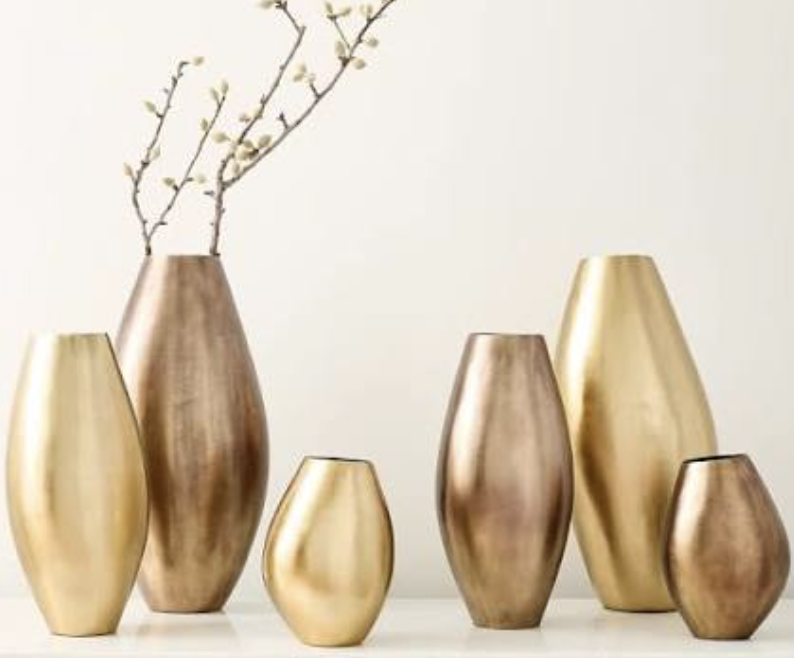
For a trade show, high-gloss gold works especially well on rounded bodies, tall cylindrical forms, and sculptural silhouettes. A small gold vase can serve as an accent on a console table, while a larger model can become the focal point of a showroom arrangement.
For wholesalers and gift distributors, the main advantage is versatility across different product presentations. Gold vases can be included in festive collections, wedding gifts, premium home accessories, and coordinated decorative sets.
That does not mean every product needs a fully gold surface. A collection containing one fully finished gold vase, one gold-accented model, and one neutral design can offer buyers more choice without creating an excessively repetitive assortment.
What buyers should check
High-gloss finishes make surface irregularities, uneven coverage, and inconsistent color more noticeable. Ask for production samples and confirm the acceptable variation between pieces before approving bulk production.
Also clarify whether the metallic decoration is intended for decorative use only. Do not assume that a metallic-looking finish is suitable for every type of use or cleaning method.
Best suited to: Premium home décor, gift retailers, seasonal collections, and statement displays.
2. Silver Metallic Ceramic Vases: Clean, Contemporary, and Easy to Coordinate
Silver metallic ceramic vases offer a cooler visual direction than gold. Depending on the shape and surface treatment, they can look minimalist, futuristic, glamorous, or industrial.
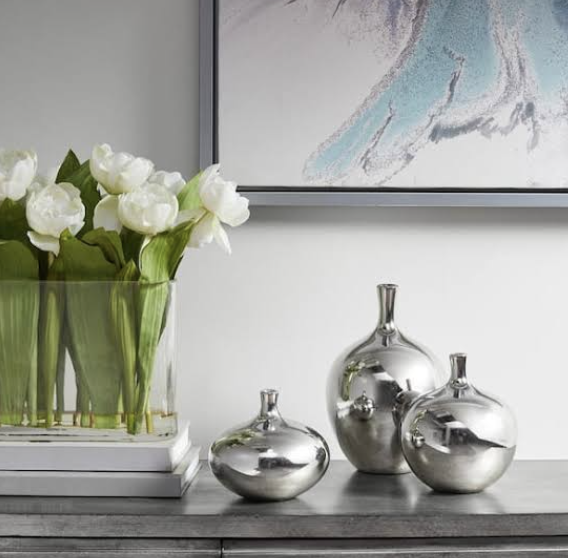
For buyers targeting contemporary home décor stores, silver finishes can work particularly well with geometric forms, narrow-necked vases, and simple sculptural designs. They can also complement neutral interior palettes without introducing a strong additional color.
At a trade show, silver is useful when building a collection around black, white, gray, and other restrained shades. A coordinated group of silver vases in three heights can create a strong display without requiring a large number of different designs.
For e-commerce sellers, consistent photography is particularly important. A reflective silver surface can look bright white in one photograph and dark gray in another depending on the lighting and surrounding objects. Product images should therefore show the actual finish as accurately as possible.
What buyers should check
Ask whether the finish is mirror-like, satin, brushed-looking, or softly metallic. These descriptions are not interchangeable, and the differences can affect customer expectations.
Confirm the sample approval process, packaging requirements, and the level of finish consistency required across the order.
Best suited to: Modern interiors, minimalist retail collections, apartment décor, and contemporary gift assortments.
3. Antique Bronze Ceramic Vases: Character for Heritage-Inspired Interiors
Not every buyer wants a shiny, newly polished appearance. Antique bronze ceramic vases offer a more subdued visual effect, often using dark brown, aged gold, and bronze tones to create a sense of depth.
This style is especially interesting for retailers whose customers prefer traditional interiors, vintage-inspired accessories, or decorative objects with a handcrafted appearance.
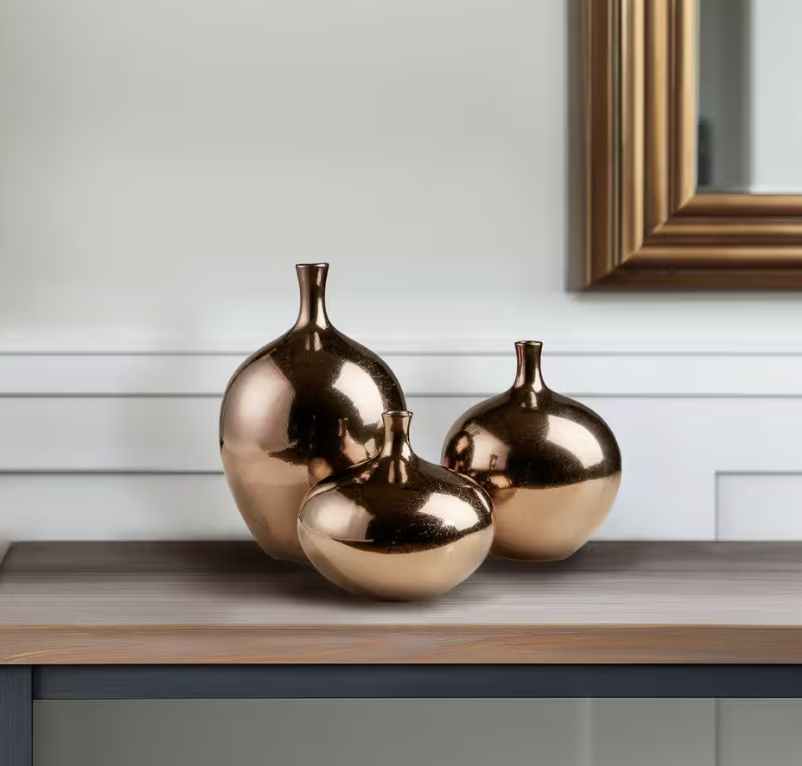
The finish can be applied across the whole vase or concentrated around raised patterns, handles, rims, or sculptural details. The latter approach can create visual contrast without making the product look overly elaborate.
From a wholesale perspective, antique bronze is worth considering for collections designed to remain on sale beyond a single holiday season. It can fit into year-round home décor assortments, although actual demand will depend on the retailer’s audience and local interior design preferences.
What buyers should check
Ask the factory to document the intended color variation. If an aged finish deliberately includes darker and lighter areas, the production specification should distinguish intentional decorative variation from unacceptable defects.
For larger orders, approve a representative sample and request clear photographs of the finished product under neutral lighting.
Best suited to: Traditional home décor, heritage-inspired collections, boutique retailers, and decorative gift stores.
4. Rose Gold Ceramic Vases: A Softer Metallic Look for Gift Collections
Rose gold combines a warm metallic appearance with a pinkish undertone. Compared with a strong yellow-gold finish, it can feel softer and more contemporary.
This makes rose gold ceramic vases worth considering for gift retailers, lifestyle boutiques, wedding-related products, and coordinated decorative collections.
The shape can influence the result significantly. Rounded bodies and smooth curves may emphasize the softness of the color, while angular forms can give the same finish a more modern appearance.
For a private-label range, rose gold can also be combined with ivory, blush, or muted neutral finishes. Such combinations provide a consistent visual theme across several product designs without requiring every item to have the same surface treatment.
One practical consideration is that rose gold is not a single universal shade. Some versions lean toward pink, while others appear closer to copper or champagne. If a buyer is developing a coordinated collection, color approval becomes especially important.
What buyers should check
Specify the desired color reference and approve the actual production sample. If the collection includes multiple vase sizes, check that the finish looks consistent across the different shapes.
Retailers should also consider whether the shade matches their existing packaging, gift boxes, and other decorative accessories.
Best suited to: Gift shops, lifestyle retailers, wedding collections, and coordinated private-label ranges.
5. Brushed Gold Ceramic Vases: Metallic Detail Without Excessive Shine
Brushed gold offers a different visual character from a smooth, mirror-like gold finish. Its textured appearance can soften reflections and make the surface feel more understated.
This style is useful for buyers who want the warmth of gold but prefer products that do not look excessively glossy. It can suit contemporary interiors, understated luxury collections, and decorative accessories designed to coordinate with natural or neutral colors.
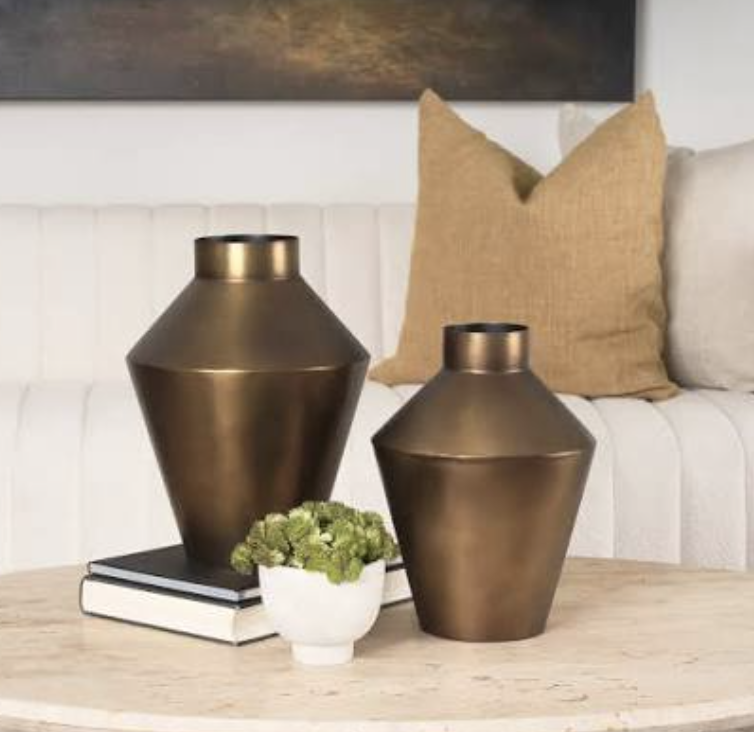
The effect can be developed across the entire vase or limited to specific sections. For example, a matte ivory body with a brushed-gold neck or base creates a more restrained design than a fully metallic surface.
From a merchandising perspective, partial metallic decoration can also help a collection feel varied while maintaining a recognizable design language.
What buyers should check
The term brushed gold may describe the visual appearance rather than a specific manufacturing process. Ask the supplier to explain how the effect is produced and how the finished surface should be maintained.
If the design includes both matte and metallic areas, inspect the boundary between the two finishes. Uneven transitions can make an otherwise attractive vase appear poorly finished.
Best suited to: Contemporary home décor, premium everyday accessories, and coordinated neutral collections.
6. Copper Metallic Ceramic Vases: Warmth and Industrial Character
Copper-effect ceramic vases offer a richer, earthier metallic direction. Depending on the finish, they can appear bright and polished or dark and weathered.
This makes copper particularly interesting for buyers developing autumn collections, industrial-inspired interiors, or decorative ranges built around warm browns, terracotta-inspired shades, and muted greens.
A copper finish can also help differentiate a collection from the more familiar gold-and-silver combinations commonly used in decorative assortments.
For trade show displays, consider combining a tall copper vase with a smaller dark bronze design and a neutral ceramic accent. The contrast can make the collection visually interesting without requiring every piece to compete for attention.
What buyers should check
Copper-effect surfaces can vary considerably in hue. Confirm whether the desired finish should appear reddish, orange-brown, darkened, or softly metallic.
If the product will be sold online, request images that show the color accurately. Strong exhibition lighting can make copper look much brighter than it appears in an ordinary living room.
Best suited to: Industrial-inspired interiors, autumn décor, contemporary gift shops, and warm-toned home accessories.
7. Gunmetal Ceramic Vases: A Bold Choice for Modern Interiors
Gunmetal-inspired finishes generally combine dark gray or charcoal tones with a metallic-looking sheen. The result can be dramatic without relying on bright color.
These vases are suitable for buyers seeking contemporary decorative objects for modern apartments, design-focused retail stores, offices, or hospitality interiors.
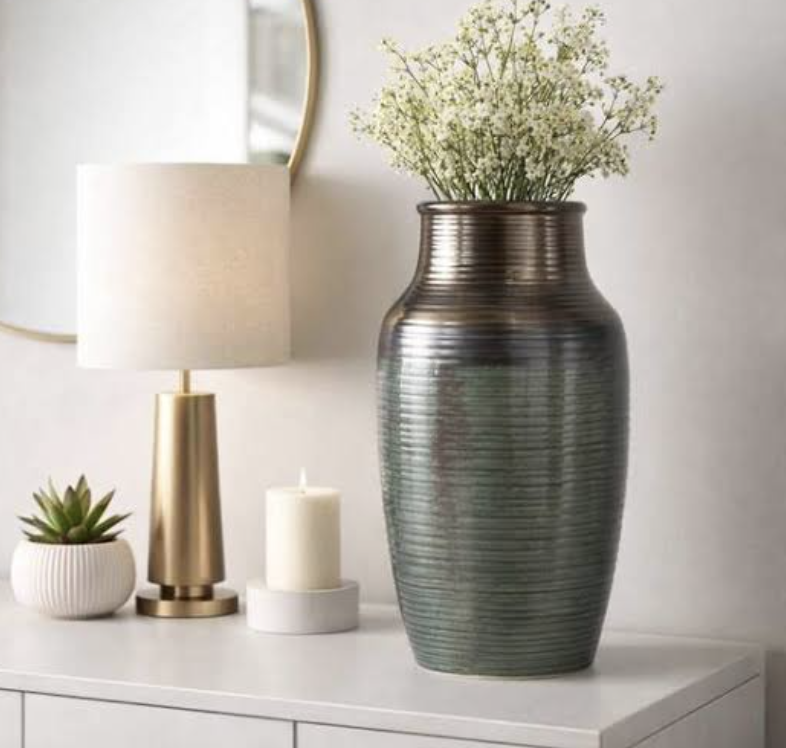
Their strength lies in contrast. A gunmetal vase can stand out against a light wall, while several dark metallic pieces grouped together can create a more architectural display.
For wholesale buyers, this style may work particularly well as part of a broader neutral collection. Pairing gunmetal with silver, black, or muted bronze provides a consistent visual direction while giving customers different levels of contrast.
However, a dark finish may reveal dust, fingerprints, or certain surface marks more readily under strong lighting. Samples should be checked from multiple angles rather than evaluated only in a single product photograph.
What buyers should check
Confirm the intended sheen, the consistency of the dark color, and the acceptable level of surface variation. For large decorative vases, also consider the stability of the base and the suitability of the packaging.
Best suited to: Contemporary interiors, design-led retailers, office décor, and modern hospitality projects.
8. Two-Tone Metallic Ceramic Vases: More Design Options Within One Collection
Two-tone metallic ceramic vases combine two distinct finishes or colors within one design. Examples include gold and black, silver and white, copper and charcoal, or bronze paired with a neutral glazed body.
The appeal for buyers is straightforward: a two-tone design can look more distinctive without requiring an unusually complicated silhouette.
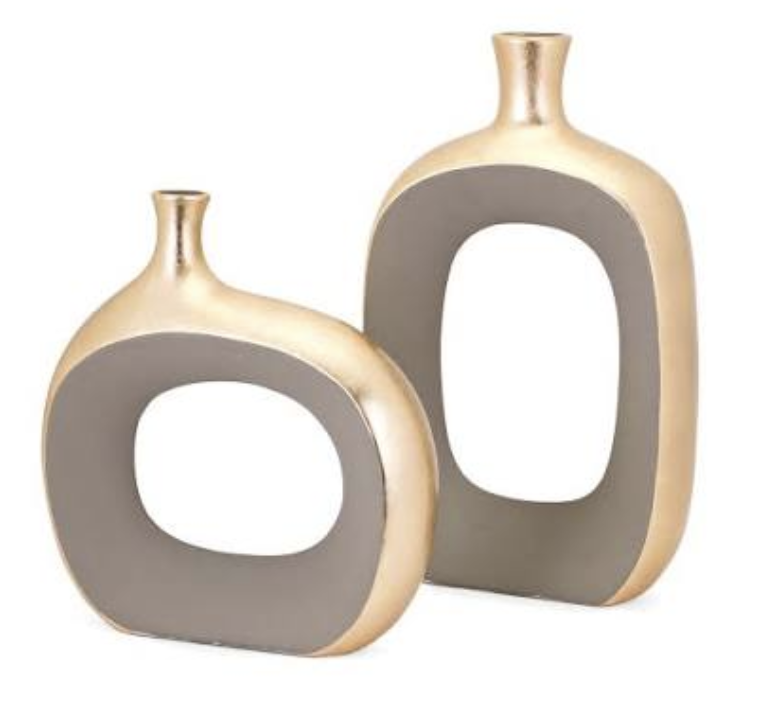
This approach is particularly useful for private-label collections. A supplier may be able to adapt an existing vase shape by changing the finish combination, allowing the buyer to develop a more recognizable assortment.
For instance, a retailer could introduce a series with the same body shape in three variations: ivory with gold accents, black with copper accents, and white with silver accents. The coordinated form creates consistency, while the finish options provide variety.
What buyers should check
Pay close attention to the transition between finishes. Clean boundaries, consistent placement, and repeatable color coverage are important when several designs are produced in the same collection.
If the metallic section is applied to a specific area, include the required dimensions or an approved reference image in the product specification.
Best suited to: Private-label ranges, coordinated home décor collections, gift sets, and multi-SKU retail programs.
9. Sculptural Metallic Ceramic Vases: Designed to Catch Attention at Exhibitions
Some vases are purchased primarily for their decorative presence rather than their ability to hold flowers. Sculptural metallic ceramic vases fit this category.
They may feature asymmetrical bodies, twisted profiles, oversized curves, irregular openings, or abstract silhouettes. A metallic-looking finish adds another layer of visual interest by emphasizing the contours of the design.
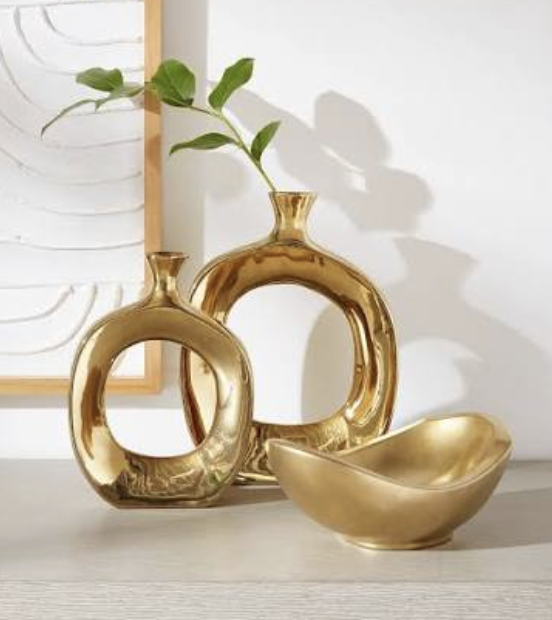
These products can be especially effective at trade shows because visitors often encounter many similar-looking home accessories in a short period. A distinctive shape can help a product stand out in a display or photograph.
The commercial opportunity, however, depends on balancing visual impact with practical considerations. An unusually shaped vase may require a custom insert, a larger carton, or additional protection around projecting sections.
What buyers should check
Evaluate the vase from the front, side, and rear. A sculptural design should have an intentional appearance from more than one viewing angle.
Check the base stability, overall dimensions, weight, packaging design, and the space required for shipping and retail display. If the product is intended for e-commerce fulfillment, conduct appropriate packaging tests before scaling up the order.
Best suited to: Design-led retailers, premium gift assortments, boutique interiors, and exhibition-focused collections.
10. Metallic-Accented Textured Ceramic Vases: Combining Surface Detail with Reflective Highlights
The final style combines a tactile-looking ceramic surface with selected metallic accents. The body might feature raised lines, carved patterns, relief details, or an irregular texture, while gold, silver, or bronze decoration highlights particular areas.
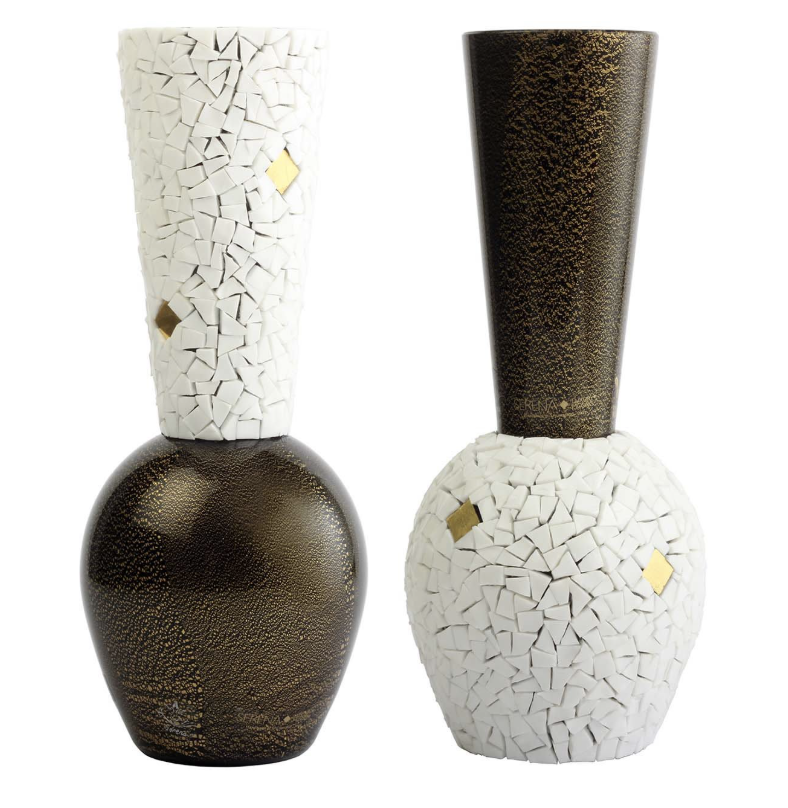
This approach creates a useful balance between visual complexity and controlled metallic decoration. Rather than covering the entire surface with a reflective finish, the design uses metallic details to emphasize the form.
For buyers, this can create a differentiated product range with several possible levels of decoration. A simple textured vase may serve as the core design, while versions with metallic highlights can be positioned as premium additions.
The style is also worth exploring for coordinated collections that include vases, planters, and other decorative ceramic accessories, provided that each product is designed for its intended use.
What buyers should check
Inspect the texture and metallic decoration together. Raised areas should be consistent with the approved design, and decorative details should not appear randomly placed unless that variation is intentional.
Confirm how the finish should be cleaned and whether the metallic decoration is suitable for the intended display environment.
Best suited to: Premium decorative collections, artisan-inspired home accessories, boutique retailers, and coordinated ceramic décor ranges.
Comparing the 10 Metallic Ceramic Vase Styles
For buyers preparing for an international trade show, the best choice depends on the collection’s intended position, customer profile, and merchandising requirements. The following comparison can help narrow the shortlist.
| Vase style | Visual character | Potential retail positioning | Main sourcing consideration |
|---|---|---|---|
| High-gloss gold | Bright, luxurious, eye-catching | Premium gifts and statement décor | Surface consistency and reflective finish |
| Silver metallic | Cool, contemporary, clean | Modern home décor and minimalist collections | Accurate finish description and photography |
| Antique bronze | Aged, warm, characterful | Heritage-inspired and year-round décor | Controlled color variation |
| Rose gold | Soft, warm, contemporary | Lifestyle gifts and coordinated collections | Precise shade matching |
| Brushed gold | Subtle, warm, less reflective | Understated luxury and neutral interiors | Texture and finish boundaries |
| Copper metallic | Rich, earthy, industrial | Warm-toned and seasonal collections | Copper hue consistency |
| Gunmetal | Dark, architectural, dramatic | Modern interiors and design-led retail | Surface marks and color uniformity |
| Two-tone metallic | Contrasting, coordinated, versatile | Private-label and multi-SKU collections | Repeatable placement of each finish |
| Sculptural metallic | Artistic, expressive, distinctive | Premium décor and design boutiques | Stability and protective packaging |
| Textured with metallic accents | Tactile, detailed, decorative | Premium ceramic accessories | Texture consistency and decorative coverage |
The table is a starting point rather than a universal ranking. A finish that performs well for one retailer may be unsuitable for another. Before committing to bulk production, compare sample quality, target retail pricing, packaging requirements, and expected order quantities.
How to Select Metallic Ceramic Vases for Different Global Markets
A product that attracts attention at an international exhibition still needs to fit the buyer’s actual sales channel. Instead of selecting designs solely by appearance, consider how each style will work in the intended market.
European home décor retailers
For European buyers, a collection may benefit from a balance between statement pieces and designs that are easy to coordinate with existing interiors.
Silver, brushed gold, muted bronze, and two-tone finishes can provide a range of visual options. Sculptural forms may help establish a more design-led assortment, while simpler silhouettes can serve as core products.

Buyers preparing for European trade fairs can explore the Ambiente Living product categories to understand the broader mix of interior accessories, decorative products, and home and garden sourcing opportunities.
North American wholesalers and e-commerce sellers
For North American buyers, collection planning should reflect the retailer’s positioning rather than rely on a single style assumption.
A home décor wholesaler supplying multiple retail channels may prefer a balanced selection of gold, silver, copper, and neutral metallic accents. An online seller with a more specialized audience may focus on sculptural designs or coordinated two-tone vases.
Product dimensions, shipping protection, carton efficiency, and accurate photography deserve particular attention when products are sold through e-commerce channels.
Middle Eastern gift and interior markets
For buyers serving premium gift channels or decorative interior projects in the Middle East, gold, bronze, and warm metallic accents may be worth testing alongside larger sculptural designs.
The key is to avoid assuming that every buyer wants the same level of ornamentation. Some projects call for a bold focal point, while others need restrained metallic detailing that works with an existing interior scheme.
A practical approach is to present several finish intensities and sizes for comparison before selecting the final collection.
Central Asian distributors and regional retailers
For Central Asian buyers, consider a balanced assortment that includes medium-sized tabletop vases, darker metallic finishes, and designs that coordinate easily with different interior styles.
Gunmetal, antique bronze, and understated gold accents may be useful candidates for sample testing. Simpler shapes can also make it easier to standardize dimensions and plan packaging across a larger wholesale order.
These are starting hypotheses, not guarantees of local demand. Buyers should validate them with existing sales data, distributor feedback, and sample evaluations.
How to Present Metallic Ceramic Vases at a Global Trade Show
A good trade show display should help buyers understand the collection quickly. The aim is not to display every available design at once, but to make the commercial options easy to compare.
Build the display around finish families
Group gold, silver, bronze, copper, and darker metallic finishes into recognizable families. This helps visitors identify the overall range before examining individual products.
Within each family, arrange vases by height or silhouette. A consistent visual order makes it easier for buyers to compare shapes and consider coordinated purchases.
Include a clear range of sizes
A collection containing small, medium, and large vases gives buyers more flexibility when planning retail displays or product bundles.
However, size variation should be commercially meaningful. Avoid creating too many nearly identical SKUs if they do not offer a clear benefit to the customer.
Provide concise product specifications
Trade show conversations are often short. Buyers should be able to obtain the essential information without repeatedly asking for details.
Prepare a product sheet covering:
- Product code and dimensions.
- Finish description and approved color reference.
- Available sizes and related designs.
- Minimum order quantity and sample policy.
- Customization options.
- Packaging method and carton specifications.
- Production lead time, subject to order confirmation.
Do not promise a standard lead time or minimum quantity unless the factory has confirmed it for the specific design.
Use lighting carefully
Reflective surfaces can look dramatically different under exhibition spotlights and ordinary indoor lighting. Display samples under conditions that allow buyers to assess the actual color and reflectivity.
If possible, provide close-up photographs alongside full product images. These help buyers understand the finish before requesting a quotation or placing an order.
Make follow-up easy
Record the designs that each buyer prefers, the target market, the expected order quantity, and any customization requests.
A short follow-up with the relevant product codes, photographs, and specifications is more useful than sending a large catalogue with no clear reference to the buyer’s interests.
OEM and ODM Sourcing: What Buyers Should Confirm Before Ordering
Once a design attracts interest at a trade show, the next step is to determine whether it can be produced consistently at the required commercial scale.
Metallic-effect ceramic vases may require additional attention to surface appearance, decorative placement, sample approval, and packaging. These details should be agreed upon before the order enters production.
1. Approve the actual finish, not just a reference photograph
A photograph is useful for communicating the general direction, but it cannot fully define reflectivity, texture, or color.
Request a physical sample whenever practical. Record the approved finish, color reference, dimensions, and any intentional decorative variations.
2. Confirm how the metallic effect is produced
Different decorative processes can create similar-looking results. Ask the supplier to explain the proposed process, its limitations, and any relevant care requirements.
This is particularly important if the vase combines metallic decoration with a matte glaze, raised texture, or several colors.
3. Define acceptable production variation
Hand-applied decoration and certain surface treatments may naturally produce minor differences between pieces. That does not mean every variation should be accepted.
Agree on which differences are part of the design and which would be considered defects. For repeat orders, retain an approved reference sample or documented specification where possible.
4. Check packaging before confirming the order
Decorative vases may have narrow necks, projecting details, or unusual silhouettes. Their packaging should protect vulnerable areas and prevent pieces from striking each other during transit.
Ask for carton dimensions, protective inserts, packing configuration, and the results of any appropriate transit or drop testing. These checks are especially important for e-commerce sellers handling individual-item fulfillment.
5. Review compliance and intended use
Requirements vary according to the destination country, product classification, decorative process, and intended use. Buyers should identify the applicable requirements with their supplier and relevant testing or compliance professionals.
If a vase is marketed strictly as a decorative object, make sure its product description and instructions reflect that intended use. Do not assume that every metallic finish is suitable for holding drinking water, food contact, or continuous water exposure.
6. Confirm the commercial terms in writing
Before placing a wholesale order, document the approved specifications, order quantity, pricing, payment terms, production schedule, inspection arrangements, packaging, and shipping responsibilities.
For repeat orders, specify how changes to the design or finish will be approved. This helps both parties manage expectations and reduces the risk of receiving a product that differs from the original sample.
Building a Commercially Balanced Metallic Vase Collection
A successful collection does not need ten completely unrelated designs. In many cases, buyers can build a stronger product range by selecting a few core silhouettes and developing different finishes around them.
For example, a collection might begin with a simple rounded vase, a tall cylindrical vase, and a sculptural centerpiece. Gold, silver, bronze, and two-tone options could then create several related SKUs.
This approach offers three practical advantages.
First, it gives retailers more choice without making the collection difficult to understand. Second, it allows buyers to compare finish preferences while keeping the overall product identity consistent. Third, it may simplify photography, merchandising, and future product development.
The final assortment should still be based on the supplier’s production capabilities, the economics of each finish, and the buyer’s target price range. A finish that looks attractive on a sample may require additional processing or quality checks, so its commercial feasibility should be confirmed before launch.
For further inspiration, buyers can explore Ambiente’s international consumer goods profile, which outlines the fair’s role in connecting retail and commercial buyers with product collections, manufacturers, and sourcing opportunities.
Frequently Asked Questions
What are the most popular metallic finishes for ceramic vases?
Gold, silver, bronze, copper, rose gold, and gunmetal-inspired finishes are useful starting points for a metallic ceramic vase collection. The best option depends on the target customer, retail positioning, and intended interior style. Buyers should test samples rather than assume that one finish will perform equally well in every market.
Are metallic ceramic vases suitable for wholesale orders?
Yes. They can be developed for wholesale collections, gift ranges, retail programs, and private-label projects. Before ordering, buyers should confirm the minimum order quantity, finish consistency, sample approval procedure, packaging requirements, and production lead time.
Which metallic ceramic vases work best for trade show displays?
High-gloss gold and silver can attract attention through their reflectivity, while sculptural and two-tone designs can help communicate a distinctive collection concept. A balanced display usually includes a few statement pieces alongside simpler designs that buyers can more easily incorporate into an existing assortment.
Can buyers customize the color and shape of metallic ceramic vases?
Customization may include the vase shape, dimensions, glaze color, metallic-looking finish, decorative accents, and packaging. Available options depend on the factory’s capabilities and the production process. Buyers should provide reference images, target dimensions, and finish expectations when requesting an OEM or ODM quotation.
What should importers check before purchasing metallic-effect ceramic vases?
Importers should check sample quality, finish consistency, dimensional tolerances, base stability, packaging performance, order quantities, production schedules, and destination-market requirements. For metallic decoration, it is also important to confirm cleaning instructions and the product’s intended use.
Are metallic ceramic vases suitable for online retail?
They can be suitable for online retail, particularly when the design has a clear visual identity and the packaging protects the product during shipping. Accurate photographs, clear dimensions, realistic color representation, and well-defined product descriptions can help manage customer expectations.
How can buyers reduce the risk of inconsistent metallic finishes?
Approve a physical reference sample, document the finish and color, define acceptable variations, and establish an inspection procedure before mass production. For repeat orders, use the same approved specifications and require approval of any significant changes to the decorative process.
What is the difference between OEM and ODM ceramic vase sourcing?
OEM sourcing generally involves manufacturing products according to the buyer’s specifications or approved design. ODM sourcing typically allows buyers to select or adapt designs developed by the manufacturer. The exact scope depends on the supplier agreement, so confirm design ownership, customization rights, tooling costs, and production responsibilities before proceeding.
How many designs should a buyer select for an initial metallic vase collection?
There is no universal number. A focused launch might begin with a small group of coordinated silhouettes and a limited number of finishes, then expand after reviewing customer feedback and sales results. The right assortment depends on the buyer’s budget, sales channels, storage capacity, and target market.
Conclusion: Turn Trade Show Interest into a Repeatable Product Range
Metallic-effect ceramic vases offer buyers a broad design vocabulary, from reflective gold and silver to aged bronze, copper accents, dark gunmetal, and sculptural statement pieces. Their commercial value comes not simply from the finish itself, but from how well the design fits the target market, retail channel, and wider collection.
For global trade shows, focus on products that are easy to understand, visually distinctive, and practical to source in repeatable quantities. Compare physical samples, document the finish, evaluate packaging, and confirm production details before moving from an exhibition conversation to a purchase order.
For brands, wholesalers, gift suppliers, and cross-border e-commerce businesses seeking customized ceramic vases, working with a capable manufacturing partner can make collection development more manageable.
Hale is a China-based ceramic factory serving global home décor and garden brands with OEM and ODM manufacturing for ceramic vases, planters, and decorative accessories. By discussing the intended market, design direction, finish requirements, and order specifications at the beginning of a project, buyers can develop metallic-effect ceramic vase collections that better reflect their brand identity and commercial goals.
