
How Verified Suppliers Deliver Bulk Matte Ceramic Bonsai Pots Worldwide
Learn how verified suppliers manage quality, bulk production, packaging, OEM orders, and worldwide shipping for matte ceramic bonsai pots.
If you are sourcing bulk matte ceramic bonsai pots for a garden center, home décor brand, gift business, or online store, the hardest part is usually not finding a supplier.
The real challenge is finding a supplier who can deliver the same quality, finish, size, color, and packaging across hundreds or thousands of pieces — and get them safely to your country.
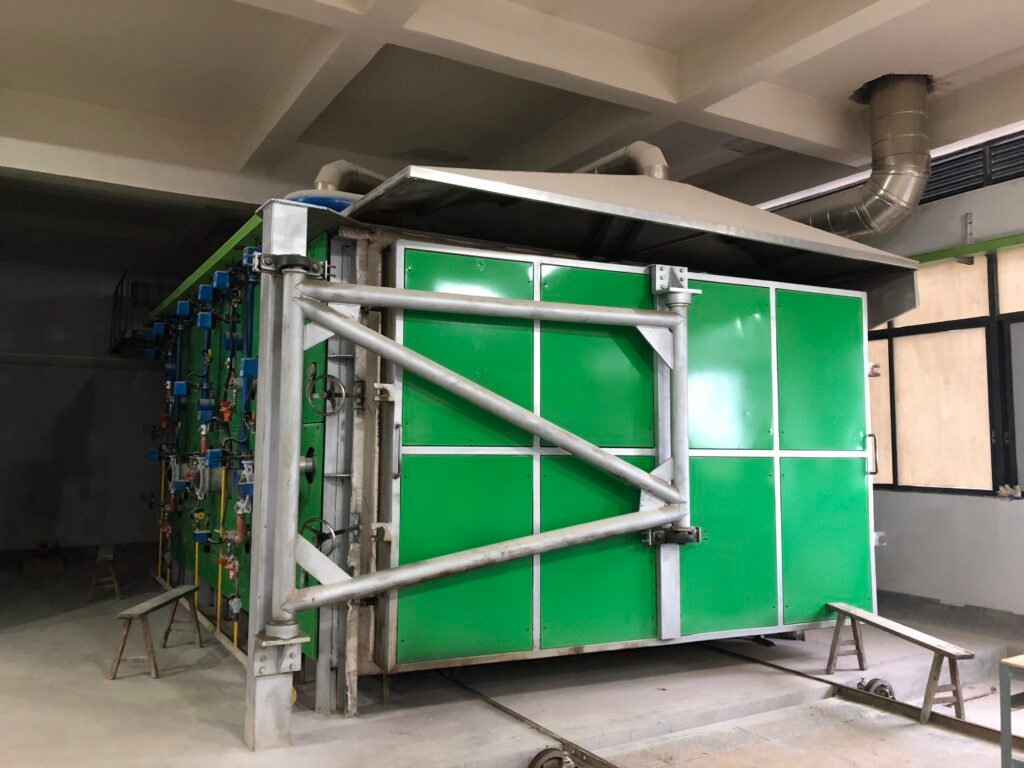
A product may look perfect in a sample photo. But once an order reaches 1,000 or 5,000 pieces, small problems can quickly become expensive ones: inconsistent matte finishes, uneven dimensions, damaged rims, poor drainage-hole positioning, weak cartons, or colors that do not match the approved sample.
That is why experienced buyers look beyond price and ask a more important question:
How does a verified supplier actually deliver bulk ceramic bonsai pots consistently around the world?
The short answer is: through supplier verification, controlled production, sample approval, batch inspection, protective packaging, and clearly defined international shipping procedures.
Let’s look at what that process really means from a buyer’s perspective.
What Makes a Ceramic Bonsai Pot Supplier “Verified”?
“Verified supplier” should not simply mean that a company has a nice website or responds quickly on WhatsApp.
For B2B buyers, supplier verification should cover several practical areas:
- Is the company a real manufacturer or only a trading company?
- Can it actually produce the required quantity?
- Does it have a repeatable quality-control process?
- Can it maintain consistent matte finishes between batches?
- Can it provide samples before mass production?
- Can it handle OEM or ODM requirements?
- Does it understand export packaging and international shipping?
- Can the supplier provide production and inspection records when needed?
Independent supplier verification can be useful here. For example, SGS describes supplier verification as checking areas such as business authenticity, production capacity, quality management, certifications, and service management.

For a buyer, this changes the conversation.
Instead of asking only, “How much is one pot?”, you start asking, “Can this supplier reliably reproduce the product I approved?”
That is much closer to the real cost of sourcing.
Why Bulk Matte Ceramic Bonsai Pots Need More Than a Good Sample
A single sample tells you what a supplier can make.
A bulk order tells you what a supplier can consistently reproduce.
This distinction matters with matte ceramic bonsai pots because the visual appeal often depends on subtle details. A smooth matte surface, clean silhouette, consistent glaze coverage, and carefully finished edges can make a simple bonsai planter look premium.
At the same time, buyers may require very specific functional details.
For example, a wholesale bonsai pot may need:
- A particular length, width, and height
- One or more drainage holes
- A specific hole diameter
- A defined matte finish
- A particular color or Pantone reference
- A matching saucer
- A custom logo
- Retail-ready packaging
- Barcode or label placement
- Special carton requirements for e-commerce fulfillment
This is where an experienced ceramic bonsai pots supplier in China should be able to move from a product photo to a clear production specification.
The more precise the specification, the easier it becomes to reproduce the same product later.
For buyers who are developing a private-label collection, this is especially important. Your first 1,000 pieces may be only the beginning. If the product performs well, you may want another 2,000 or 5,000 pieces several months later.
Your supplier should be able to reproduce the approved product — not create something “similar.”
The 6-Step Process Behind Reliable Global Delivery
A reliable supplier usually treats international bulk orders as a process rather than a single transaction.

1. Start With a Detailed Product Specification
Before production starts, both sides should agree on what exactly is being produced.
For a custom matte ceramic bonsai pot, this may include:
- Product dimensions
- Weight
- Shape and design
- Matte surface requirements
- Color
- Drainage-hole design
- Saucer requirements
- Logo or branding
- Packaging
- Quantity
- Carton dimensions
- Shipping requirements
This is also where OEM and ODM projects become much easier.
If you are creating private label bonsai pots, for example, you may already have a drawing, product sample, logo, packaging design, or reference image.
A capable manufacturer should be able to turn those ideas into a workable production specification.
2. Approve the Sample Before Mass Production
This step sounds obvious, but it is one of the most important.
Do not approve a large production order based only on digital images if the finish, color, size, or shape matters to your brand.
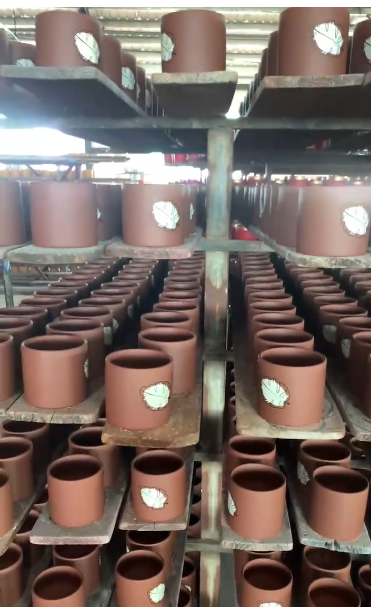
A physical sample gives you the opportunity to check:
- Actual dimensions
- Surface feel
- Color under natural light
- Drainage design
- Stability
- Rim finishing
- Logo placement
- Overall appearance
- Packaging requirements
For a new product line, it is also useful to keep an approved sample as a golden sample.
The golden sample becomes the physical reference for future production.
This is particularly useful when sourcing wholesale matte ceramic bonsai pots repeatedly, because the approved standard becomes much easier to communicate between the buyer, production team, and quality-control staff.
3. Control Quality During Production
Quality control should not begin after the last pot has been produced.
A better approach is to monitor quality during the manufacturing process.
For ceramic bonsai planters, suppliers can pay attention to different stages, including forming, drying, surface treatment, firing, finishing, inspection, and packing.
Typical quality checkpoints may include:
Dimensions:
Are the pots within the agreed size tolerance?
Surface:
Is the matte finish even and consistent?
Shape:
Are the pots straight, stable, and free from significant deformation?
Edges:
Are rims and corners properly finished?
Drainage:
Are drainage holes correctly positioned and open?
Appearance:
Are there unacceptable cracks, chips, pinholes, stains, or other visible defects?
Color:
Does the production batch remain within the approved color range?
This kind of process-based quality control is more dependable than simply checking a few random pieces at the end.
Organizations such as SGS also provide supplier inspection services covering areas such as manufacturing processes, dimensions, documentation, final products, packaging, and loading.
That gives buyers another option when independent third-party inspection is required.
Bulk Ceramic Bonsai Pots: What Should Buyers Verify?
For a large order, the following points are worth putting into the purchase specification rather than leaving them to verbal communication.
| What to verify | Why it matters for bulk orders |
|---|---|
| Dimensions & tolerances | Prevents inconsistent product sizing across the batch |
| Matte finish | Keeps the collection visually consistent |
| Color reference | Reduces noticeable color variation between production batches |
| Drainage holes | Important for bonsai functionality and customer expectations |
| Surface defects | Helps control the acceptable defect level |
| Logo & branding | Protects private-label consistency |
| Individual packaging | Reduces chips and scratches during handling |
| Master carton packing | Helps control transport damage and warehouse efficiency |
| Carton markings | Makes receiving and inventory management easier |
| Inspection records | Gives buyers greater visibility before shipment |
The point is not to make the purchasing process complicated.
It is actually the opposite.
Clear specifications make bulk purchasing simpler because everyone knows what “acceptable” means.
Packaging Is Part of Product Quality
Here is something buyers sometimes discover too late:
A supplier can manufacture excellent bulk ceramic bonsai pots and still deliver a disappointing order if the packaging is not designed for international transportation.
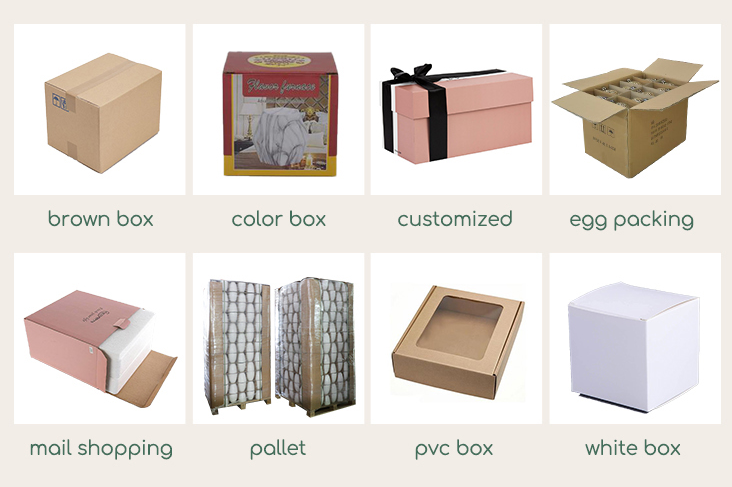
Ceramic products may pass factory inspection perfectly and still arrive with damaged rims or broken pieces after a long journey involving loading, unloading, warehouse handling, and container transportation.
That is why export packaging should be discussed early — not after production is finished.
Depending on the product and destination, packaging may include individual protective wrapping, molded protection, inner boxes, dividers, reinforced cartons, palletization, moisture protection, or customized retail packaging.
The right solution depends on the pot design, quantity, shipping method, and buyer’s requirements.
For e-commerce sellers, packaging becomes even more important.
A buyer selling small ceramic bonsai pots online may care about the unboxing experience, while a garden retailer may prioritize carton efficiency and fast warehouse handling.
The best packaging is therefore not necessarily the largest amount of packaging.
It is the packaging that balances protection, cost, storage, handling, and presentation.
How Verified Suppliers Handle Worldwide Shipping
Once production is complete, the supplier still has another job: getting the goods from the factory to the buyer.
For international B2B orders, buyers should clarify:
- Port of loading
- Shipping method
- Destination port or warehouse
- Carton dimensions and total CBM
- Gross and net weight
- Export documentation
- Shipping responsibilities
- Insurance requirements
- Delivery terms
- Estimated production and transit schedules
This is where Incoterms become useful.
The International Chamber of Commerce explains that Incoterms® 2020 define the allocation of costs, risks, and responsibilities between buyers and sellers in international trade.
For example, a buyer and supplier should not casually use terms such as FOB, CIF, or DDP without understanding exactly who is responsible for which part of the shipment.
A professional supplier should be comfortable discussing these details before the order is confirmed.
The goal is simple:
There should be no surprise about who pays, who arranges, who insures, and who takes responsibility at each stage of delivery.
What About Quality Certifications?
Certifications can be helpful, but they should not replace practical supplier evaluation.
For example, ISO 9001 focuses on quality management systems and continual improvement.
But a certificate alone does not tell you whether a particular ceramic bonsai pot manufacturer can reproduce your custom shape, maintain your required matte finish, or package 3,000 pieces safely for export.
For buyers, it is better to look at the bigger picture:
Factory capability + production process + sample approval + quality control + inspection + packaging + shipping experience.
That combination gives you a much clearer idea of whether the supplier can actually handle your order.
OEM and ODM Make Bulk Bonsai Pots More Flexible
For established garden brands, sourcing an existing product is only one option.
Many buyers want to develop something more distinctive.
That is where OEM and ODM ceramic bonsai pots can become valuable.
For example, a brand might start with a standard matte bonsai planter and then customize:
- Shape
- Size
- Matte color
- Texture
- Drainage-hole configuration
- Logo
- Packaging
- Matching saucer
- Product sets
- Retail presentation
An ODM project can go further by developing a new product concept around the buyer’s market positioning.
This can be particularly useful for cross-border e-commerce sellers who need products that are visually different from the thousands of generic listings already online.
A good factory does not simply ask, “How many pieces do you need?”
It should also ask:
“What are you trying to build with this product?”
That is a much more useful starting point for product development.
How Buyers Can Reduce Risk Before Placing a Large Order
You do not need to make supplier sourcing complicated.
A simple checklist can eliminate many problems before they become expensive.
Before ordering bulk matte ceramic bonsai pots, ask your supplier:
- Can you provide a physical sample?
- Can you reproduce the sample consistently?
- What are your acceptable production tolerances?
- How do you inspect finished products?
- Can you provide pre-shipment inspection photos or reports?
- How are the pots individually packed?
- How are cartons tested or reinforced for export?
- Can you provide customized packaging?
- Can you support OEM or ODM production?
- Which shipping terms can you quote?
- What is the realistic production lead time?
- What happens if the shipment contains unacceptable defects?
The answers will tell you much more than a low unit price ever will.
The Real Value of a Verified Supplier
When buyers compare ceramic bonsai pot suppliers, it is tempting to focus on the quotation first.
But the lowest unit price is rarely the same thing as the lowest total sourcing cost.
Imagine ordering 3,000 pots and discovering that the matte finish varies noticeably across the batch.
Or receiving 2,500 good pieces and 500 pieces that need rework.
Or finding that the packaging was not strong enough for international shipping.
Or realizing that your supplier cannot reproduce the same design six months later.
Suddenly, the “cheap” quotation becomes expensive.
A verified supplier helps reduce these risks by making the process more predictable.
And predictability is incredibly valuable when you are building a product line, managing inventory, planning promotions, or selling through multiple channels.
FAQ: Bulk Matte Ceramic Bonsai Pots
What is the best way to verify a ceramic bonsai pot supplier?
Start by verifying the supplier’s business identity, factory capability, production capacity, quality-control process, sample quality, export experience, and packaging capabilities. For larger orders, buyers can also consider an independent factory or supplier inspection.
What should I ask a supplier before ordering wholesale bonsai pots?
Ask about product specifications, MOQ, sample approval, production lead time, quality standards, packaging, inspection, customization, shipping terms, and how defects are handled.
Can matte ceramic bonsai pots be customized?
Yes. Depending on the manufacturer’s capabilities, buyers can customize dimensions, shapes, matte colors, drainage-hole designs, logos, packaging, and other product details. OEM and ODM projects can also be developed from drawings, samples, or concepts.
How are ceramic bonsai pots packaged for international shipping?
Packaging depends on the pot design, quantity, destination, and shipping method. Individual protection, inner cartons, dividers, reinforced master cartons, and palletization can all be considered to reduce transportation damage.
How do I order bulk matte ceramic bonsai pots from China?
A practical process is to identify a suitable manufacturer, send your product requirements, review the quotation, approve samples, confirm specifications and packaging, place the production order, inspect the goods, and then arrange international shipment.
The Right Supplier Should Make Bulk Sourcing Easier
Sourcing bulk matte ceramic bonsai pots from overseas does not have to feel like a gamble.
The right supplier should give you confidence at every stage — from the first sample to the final carton.
For buyers, the most important things to look for are not just attractive product photos or competitive prices. Look for consistent manufacturing, clear specifications, reliable quality control, secure export packaging, transparent communication, and real international delivery experience.
That is the difference between simply buying ceramic pots and building a dependable supply chain.
At Hale, we are a China-based ceramic manufacturer providing OEM & ODM orders for gardening brands worldwide. Our product range covers ceramic garden pots, bonsai pots, planters, vases, and home décor pieces, with flexible customization for brands, garden product buyers, gift companies, and cross-border e-commerce sellers.
If you are developing a new collection or looking for a reliable source for wholesale matte ceramic bonsai pots, Hale can work with your specifications from sample development and customization through bulk production and export packing.
A good product gets attention. A reliable manufacturing partner helps you keep selling it.
