
In the world of international trade, tariffs can have significant effects on the prices of products and the decisions made by businesses involved in procurement. For B2B buyers in the ceramic vase market, understanding the role of trade tariffs is crucial for making informed decisions, especially when planning for 2025. This article delves into the concept of tariffs, how they impact ceramic vase prices, and what procurement professionals should consider when preparing their purchasing plans.
1. What Are Tariffs?
Tariffs are taxes or duties imposed by a government on goods imported from other countries. These fees are typically added to the price of a product, making it more expensive for consumers and businesses. The primary purpose of tariffs is to protect domestic industries by making foreign products less competitive, but they can also serve political or economic objectives.
There are different types of tariffs, including:
- Ad valorem Tariffs: A percentage of the value of the imported product (e.g., 10% on all imported ceramic vases).
- Specific Tariffs: A fixed fee per unit or quantity (e.g., $5 per vase).
- Compound Tariffs: A combination of both ad valorem and specific tariffs.
For example, if a ceramic vase is priced at $50 and a 10% tariff is imposed, the cost of the vase for the importer will rise to $55. If a specific tariff of $5 per unit is applied, the cost of the same vase will be $55, regardless of its original price.
2. The Impact of Trade Tariffs on B2B Ceramic Vase Buyers
When tariffs are introduced, they can have several consequences for B2B buyers sourcing ceramic vases from countries like China. The effect on pricing, logistics, and overall procurement strategy can be significant. Below are some of the key impacts:
a. Increased Costs for Importers
Trade tariffs can significantly raise the cost of imported goods, including ceramic vases. This directly impacts buyers who depend on international suppliers, particularly from countries where the manufacturing of ceramic vases is prominent, like China.
Example: If a U.S.-based company imports ceramic vases from China, and the U.S. government imposes a 25% tariff on Chinese imports, the price of each vase will rise. While this cost increase may initially be absorbed by the importer, it can eventually lead to higher prices for consumers or reduced profit margins for businesses.
b. Supply Chain Disruptions
Tariffs often lead to changes in supply chain dynamics. Importers may seek alternative suppliers in countries where tariffs are lower or nonexistent. This could mean switching from Chinese suppliers to those based in Vietnam, India, or other regions that don’t face the same tariffs.
Example: A company sourcing ceramic vases from China might find that after tariffs are applied, the cost of goods sold increases by 20%. In response, they might decide to source vases from a country with a more favorable trade agreement, such as Vietnam, where production costs are lower, and tariffs are reduced or eliminated.
c. Impact on Market Prices
Increased costs due to tariffs typically result in higher prices for end consumers. For B2B buyers, this could affect their pricing strategies. If businesses are unable to absorb the higher costs, they may be forced to pass them on to their customers.
This is especially critical for industries that rely heavily on price competitiveness, such as wholesale markets and e-commerce businesses that deal in high volumes of ceramic vases. Companies may need to adjust their pricing strategies to maintain profitability while remaining competitive in the market.
d. Uncertainty in Pricing and Procurement
Another important factor to consider is the uncertainty tariffs create. When governments change tariff policies frequently, it creates instability in the market. Importers may find it difficult to predict future costs, making it harder to plan procurement strategies accurately.
In some cases, businesses may choose to stockpile inventory in anticipation of rising tariffs, while others might delay orders until they have more clarity on the tariff situation.
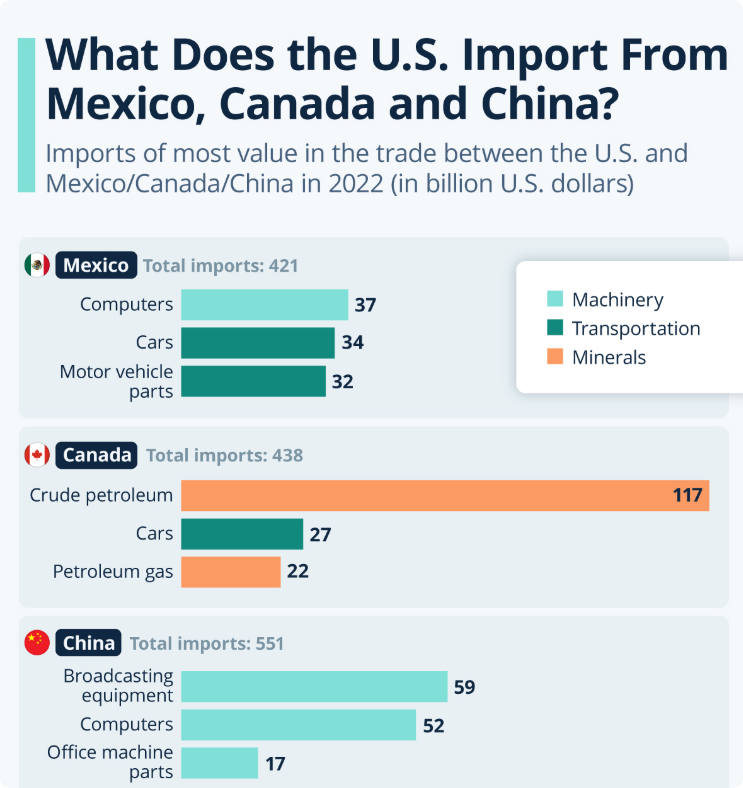
What Does the U.S. Import From Mexico, Canada And China?
3. Preparing for 2025: Strategic Steps for B2B Buyers in the Ceramic Vase Market
As tariffs continue to evolve, businesses involved in the procurement of ceramic vases must adapt their strategies to mitigate the potential risks posed by tariffs. Here are key steps to prepare for 2025:
a. Diversifying Supplier Sources
To reduce dependence on a single country or supplier, B2B buyers should consider diversifying their sources of ceramic vases. This reduces the impact of tariffs on any single region and provides greater flexibility in sourcing.
Actionable Tip: Identify suppliers in countries with favorable tariff agreements or no tariffs at all, such as Mexico for U.S.-based buyers or Southeast Asia for European buyers. This could help mitigate the financial impact of higher tariffs.
b. Reviewing Long-Term Contracts
B2B buyers should review long-term contracts with their suppliers to ensure that they can adjust prices to reflect tariff changes. Negotiating flexible terms with suppliers can provide a cushion against unexpected tariff hikes.
Actionable Tip: Negotiate clauses that allow for price adjustments in case of new tariffs or changes in government policies. For example, a contract might include a clause allowing the supplier to raise prices if tariffs increase by a certain percentage.
c. Exploring Alternative Shipping Routes
In some cases, tariffs can be avoided or minimized by routing goods through countries with better trade deals. For instance, if the U.S. imposes a tariff on goods from China, some importers route their products through countries like Hong Kong or Taiwan, which may have better trade agreements with the U.S.
Actionable Tip: Work with logistics partners to explore alternative shipping routes that might bypass tariff-heavy countries.
d. Building Strategic Partnerships with Suppliers
Forming long-term, strategic partnerships with ceramic vase suppliers can help B2B buyers gain better insight into potential tariff changes and work collaboratively on ways to mitigate their impact.
Actionable Tip: Develop closer relationships with suppliers and manufacturers who are well-versed in the tariff landscape. This can help businesses stay ahead of tariff changes and adapt their procurement strategies quickly.
4. Conclusion
Trade tariffs are a significant factor in the global ceramic vase market. For B2B buyers, understanding how tariffs work and their potential impact on pricing, supply chains, and procurement plans is crucial for maintaining profitability and competitiveness. With the potential for tariff changes in 2025, businesses must diversify their supply chains, review contracts, and explore alternative shipping routes to prepare for the future.
By taking these proactive steps, B2B buyers in the ceramic vase market can mitigate risks, avoid disruptions, and continue to thrive in an increasingly complex global trade environment.
Key Takeaways for B2B Buyers:
| Strategy | Benefits | Actionable Tip |
|---|---|---|
| Diversifying Suppliers | Reduces reliance on a single market and minimizes tariff risks | Identify alternative suppliers in low-tariff regions |
| Reviewing Long-Term Contracts | Allows flexibility in pricing amid tariff changes | Negotiate flexible pricing clauses with suppliers |
| Exploring Alternative Shipping Routes | Bypasses tariffs by routing products through third-party countries | Work with logistics partners to find optimal routes |
| Building Strategic Partnerships | Enhances collaboration and insight into future tariff changes | Establish closer ties with experienced ceramic vase suppliers |
By understanding the broader effects of tariffs, preparing in advance, and adopting strategic procurement practices, B2B buyers can position themselves to succeed in the global ceramic vase market despite ongoing changes in international trade policies.
Want to take your home & garden ceramic business to new heights? Reach out to Hale for expert consultation and bulk order services.
